Hello there, I’m Ferb Vu. For years, I’ve been captivated by the natural world, and one tree that consistently sparks curiosity is Sassafras Albidum. It’s a plant with a rich history, unique characteristics, and, as you’ll see, some important considerations. Many people approach me with questions about it, so I decided to compile some of the most frequent ones here. Let’s delve into the world of this fascinating North American native.
What Exactly is Sassafras Albidum?
Sassafras Albidum is a deciduous tree. It is native to eastern North America. You can find it from southern Maine and southern Ontario west to Iowa, and south to central Florida and eastern Texas. It belongs to the Lauraceae family, which also includes cinnamon and bay laurel. This tree is known for its aromatic properties. Every part of the tree, from roots to leaves, carries a distinct, pleasant scent. Some describe it as citrus-like, others like root beer.
The tree itself can vary in form. Sometimes it grows as a large shrub. Other times, it becomes a medium-sized tree, reaching heights of 15 to 20 meters. Its branches are often slender and spread horizontally. The bark of young trees is smooth and greenish. As the tree matures, the bark becomes thick, reddish-brown, and deeply furrowed. It’s a pioneer species, often one of the first trees to colonize disturbed areas like old fields or forest edges.
How Can I Identify Sassafras Albidum?
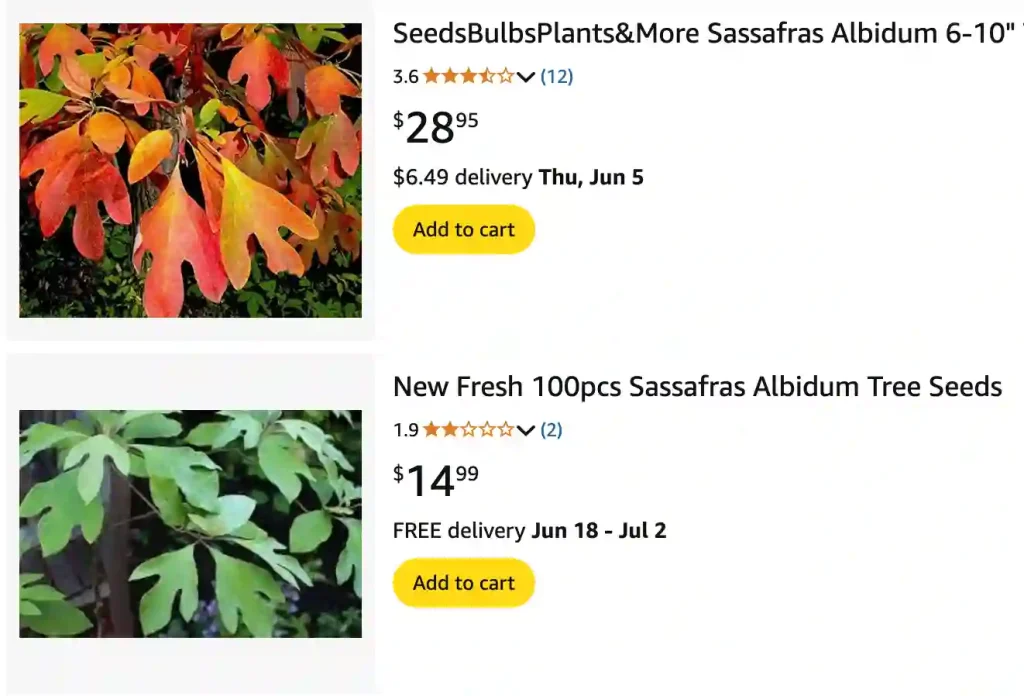
Identification is quite straightforward, primarily due to its unique leaves. Sassafras Albidum exhibits heterophylly. This means it displays leaves of different shapes on the same tree. You’ll typically find three distinct leaf forms:
- An unlobed oval leaf.
- A mitten-shaped leaf (with one “thumb” lobe).
- A three-lobed leaf (resembling a trident).
These leaves are alternate on the stem. They are bright to medium green in summer. In autumn, they turn spectacular shades of yellow, orange, pink, and red. This makes the tree a beautiful ornamental.
Beyond the leaves, the twigs are usually green and somewhat mucilaginous when chewed. If you crush a leaf or a young twig, the characteristic aroma is a strong giveaway. In spring, small, fragrant, yellow-green flowers appear. These usually emerge before the leaves. Female trees, if pollinated, will produce small, dark blue to black drupes (fruits). These are borne on bright red, fleshy stalks. Birds and other wildlife relish these fruits.
What Were the Traditional Uses of Sassafras Albidum?
Historically, Sassafras Albidum was highly valued. Indigenous peoples of North America used it extensively. They used it for culinary, medicinal, and practical purposes. Decoctions of the root bark were used to make a tea. This tea was popular for its flavor and perceived health benefits. It was often considered a spring tonic or blood purifier.
Early European colonists quickly adopted these uses. Sassafras became one of the first major exports from North America to Europe. The root bark was the primary component used to flavor traditional root beer. Its distinct taste was the cornerstone of this popular beverage for a long time. The wood, while not incredibly strong, is durable and aromatic. It was used for small furniture items, fence posts, and kindling due to its flammability. The leaves can also be dried and ground to produce filé powder. This is a thickening agent used in Creole and Cajun cuisine, particularly in gumbo.
Is Sassafras Albidum Poisonous?
This is perhaps the most critical question people ask. The concern centers on a specific chemical compound: safrole. Safrole is the primary aromatic component in the root bark of Sassafras Albidum. It is also present in smaller amounts in the leaves and wood.
In the mid-20th century, studies began to investigate safrole. Research conducted in the 1950s and 1960s on laboratory animals showed that high doses of safrole could induce liver damage and liver cancer. Following these findings, the U.S. Food and Drug Administration (FDA) took action. In 1960, the FDA banned the use of safrole and sassafras oil containing safrole as a food additive and flavoring agent. This effectively ended the commercial production of traditional sassafras tea and root beer made directly from sassafras root bark in the United States.
So, to answer directly: yes, parts of Sassafras Albidum, specifically the root bark which is rich in safrole, are considered toxic and carcinogenic with chronic exposure. Modern root beer uses artificial flavoring or safrole-free sassafras extract. Filé powder, made from the leaves, contains very little safrole and is generally recognized as safe (GRAS) by the FDA when used in traditional amounts as a food thickener. However, consuming sassafras root bark or oil derived from it is not recommended due to the health risks associated with safrole.
Can I Still Grow Sassafras Albidum in My Garden?
Absolutely. Growing Sassafras Albidum as an ornamental tree is perfectly legal and quite popular. The restrictions apply to its use in food and drink, not to its cultivation. It’s a beautiful tree. Its unique foliage, attractive autumn color, and interesting form make it a worthy addition to many landscapes.
It prefers well-drained, acidic, sandy loam soils but is adaptable to various soil types. Full sun to partial shade is ideal for its growth. Keep in mind that it can spread by root suckers. This can lead to a sassafras thicket if not managed, which can be desirable in naturalized areas but perhaps less so in a formal garden.
What is the Ecological Importance of Sassafras Albidum?
Ecologically, Sassafras Albidum plays several important roles. As mentioned, its fruits are a valuable food source for many bird species, including robins, mockingbirds, and wild turkeys. Mammals like deer, rabbits, and black bears also browse on its twigs and foliage.
It serves as a larval host plant for several species of butterflies and moths. The most notable is the Spicebush Swallowtail butterfly (Papilio troilus). Its caterpillars feed on the leaves. The tree’s tendency to colonize disturbed areas also makes it important for ecological succession, helping to stabilize soil and pave the way for other forest species.
Sassafras Albidum is a tree of contrasts. It offers beauty, unique character, and a rich history. Yet, it also carries a note of caution regarding its traditional uses. Understanding these aspects allows us to appreciate this remarkable species responsibly. I hope this clears up some of your questions. Nature is full of such complex stories.

If i die, water my plants!