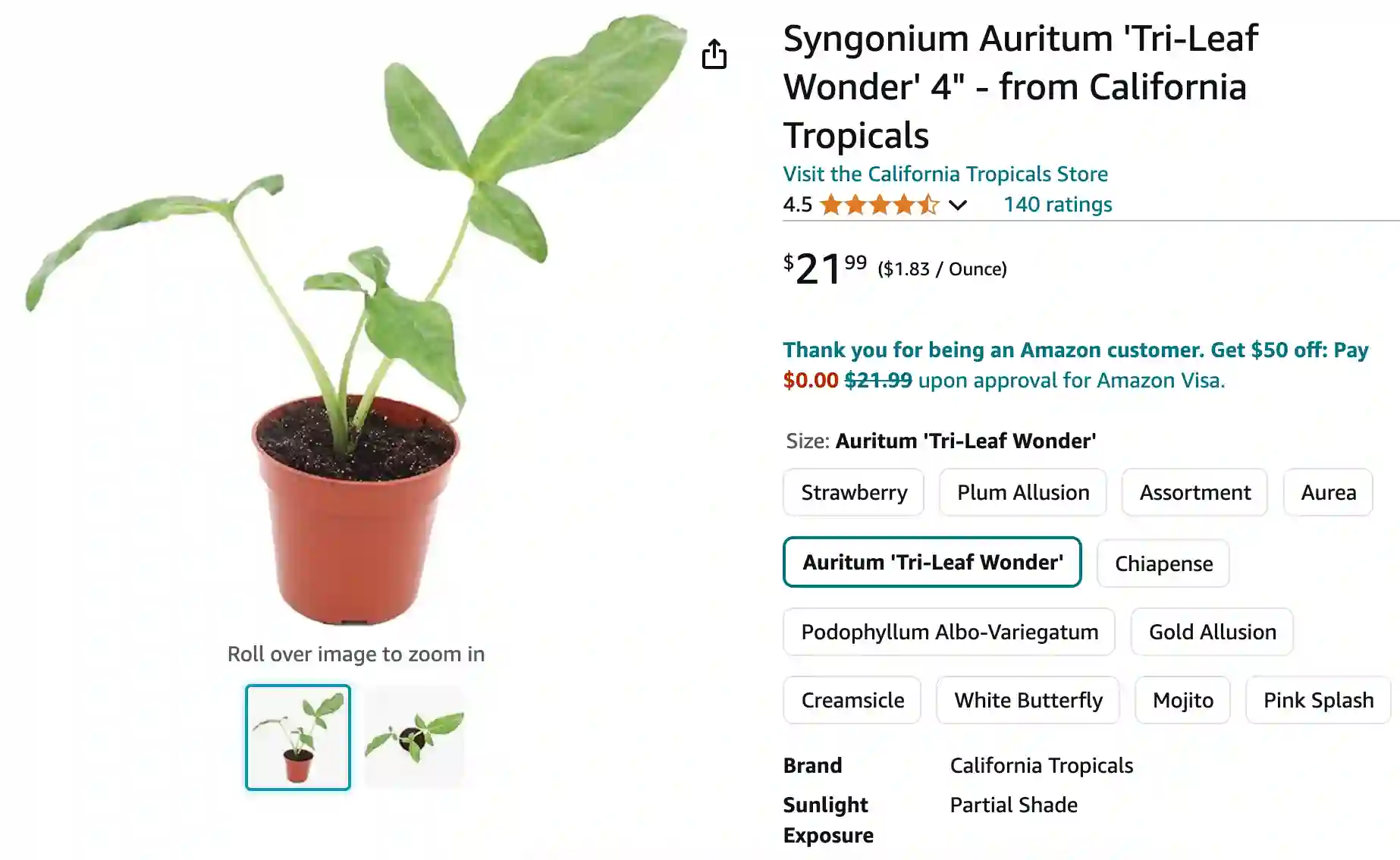
Hello, dear plant enthusiasts! You’ve heard stories from many a leafy companion, but none quite like mine. I am a Syngonium ‘Trileaf Wonder’, a proud member of the Araceae family, native to the lush, humid understories of Central and South American rainforests. While my wild cousins might scramble up towering trees, my destiny, and indeed my wonder, unfolds within the cozy confines of your home. You might know my relatives by names like Arrowhead Plant, Goosefoot, or Nephthytis, but I am unique. My glossy, dark green leaves, distinctively divided into three parts – two smaller side leaflets flanking a larger central one – truly earn me the moniker ‘Trileaf Wonder’.
Allow me to share my journey with you, from a humble cutting to a thriving, vining spectacle, told in a time-lapse format through the eyes of my devoted gardener.
Chapter 1: The Promise of New Life (Weeks 1-8)
Gardener’s Log: Day 1 “Today marks the beginning of a new adventure! I received a beautiful stem cutting of a Syngonium ‘Trileaf Wonder’. It’s just a few inches long, with a couple of healthy nodes and a single, perfectly formed tri-lobed leaf. The original plant it came from was simply stunning, and I can’t wait to see this little one thrive. I’ve placed it in a clear glass of filtered water, ensuring at least one node is submerged. Bright, indirect light on the windowsill is its new temporary home. Now, we wait.”
My first sensation was the cool embrace of water. The world outside my glass seemed vibrant, but my focus was inward. Days turned into a week, then two. My gardener meticulously changed my water every few days, a refreshing ritual that prevented stagnation. Patience, I learned, was a virtue.
Gardener’s Log: Week 3 “Success! Tiny white nubs are emerging from the node. These are the beginnings of roots. It’s incredibly satisfying to see life stirring. I’ll let them develop a bit more before considering a transfer to soil.”
The nubs stretched, elongating into delicate white filaments. They were fragile yet determined, reaching deeper into the water. Each day, they grew longer, branching out, forming a miniature underwater network. This was my anchor, my future.
Gardener’s Log: Week 6 “The roots are about an inch long now, healthy and well-branched. It’s time for the next step. I’ve prepared a custom soil mix: a blend of high-quality potting soil, plenty of perlite for drainage, and some orchid bark for aeration. Syngoniums, like most aroids, hate wet feet. I’m giving it a small, well-draining pot, just enough space for its new root system.”
The transition was a gentle shock. From the clear water, I was nestled into a dark, earthy embrace. It felt different, heavier, but also grounding. My roots immediately began to explore their new environment, sensing the moisture and nutrients within.
Chapter 2: The Juvenile Sprout (Months 1-6 Post-Potting)
Gardener’s Log: Month 1 “My little ‘Trileaf Wonder’ has settled in beautifully. It’s been a month since potting, and while there isn’t much visible top growth yet, I know it’s busy establishing its roots. I’m keeping the soil consistently moist, but never soggy, and ensuring it gets plenty of bright, indirect light. Humidity is crucial, so it’s living near a humidifier.”
Life in the pot was a subterranean ballet. My roots branched, absorbing water and nutrients, anchoring me firmly. The light above was a constant, gentle warmth, and the air around me felt just right – humid and comforting.
Gardener’s Log: Month 2 “A breakthrough! A tiny, tightly furled spear has emerged from the central stem. It’s so exciting to see new growth. This is the promise of a new leaf, and it looks like it’s going to be another gorgeous tri-lobed one, just like its predecessor.”
The spear unfurled slowly, meticulously, revealing the familiar glossy green and perfect three-lobed structure. It was smaller than my original leaf, a miniature replica, but perfectly formed. This was my first independently grown leaf, a testament to my resilience.
Gardener’s Log: Month 4 “Another two leaves have unfurled! My ‘Trileaf Wonder’ is truly living up to its name, with each new leaf displaying that distinctive three-part division. It’s still a compact, bushy plant, about 6-8 inches tall. The leaves are vibrant, deep green, and incredibly healthy. I’ve started a very diluted half-strength liquid fertilizer regimen once a month during watering.”
New leaves continued to emerge, one after another, each a marvel of symmetrical design. I was growing taller, my stem thickening slightly. My gardener was observant, noting the subtle changes. The occasional misting felt like a refreshing morning dew.
Chapter 3: The Adolescent Vine (Months 7-18)
Gardener’s Log: Month 7 “My ‘Trileaf Wonder’ is starting to show its true nature! The stem is elongating, and I can see tiny bumps forming near the nodes – aerial roots! This plant is starting to vine. It’s currently about a foot tall, but I know it’s capable of so much more. I’m considering adding a moss pole to encourage it to climb.”
This was a new phase of my existence. My stem stretched, reaching for something, anything, to cling to. The aerial roots, like eager fingers, extended into the humid air, ready to grasp. I was no longer content to be merely bushy; an innate desire to climb pulsed within me.
Gardener’s Log: Month 10 “The moss pole is in! I gently tied some of the longer vines to it, guiding them upwards. The ‘Trileaf Wonder’ has responded beautifully, and I can already see some aerial roots beginning to attach to the damp pole. The leaves are also getting noticeably larger, maintaining their stunning tri-lobed form but becoming more substantial.”
The moss pole was a revelation. Its textured surface provided the perfect grip, and its consistent moisture was a lifeline for my aerial roots. I felt a surge of energy, stretching upwards, unfurling new leaves with renewed vigor. Each new leaf was slightly larger, bolder, contributing to my burgeoning presence.
Gardener’s Log: Month 14 “My ‘Trileaf Wonder’ is truly a showstopper now. It’s climbed over 2 feet up the moss pole, and the foliage is incredibly dense. I’ve had to prune it a few times, snipping off some of the leggy lower stems to encourage more bushiness at the base. It’s amazing how quickly it recovers and pushes out new growth.”
Pruning felt like a haircut, a momentary trim that ultimately led to greater vitality. New shoots emerged from the trimmed nodes, adding to my lushness. I was a vibrant column of green, a living sculpture in the room.
Chapter 4: The Mature Majesty (Year 2 Onwards)
Gardener’s Log: Year 2 “It’s been two years since I started that little cutting, and my ‘Trileaf Wonder’ is magnificent! It’s easily 4 feet tall now, having completely enveloped the moss pole. The leaves at the top are truly enormous, still perfectly three-lobed, but sometimes showing hints of even further division, evolving towards a more pedate (multi-lobed) form, which is typical for very mature Syngoniums. It’s a testament to consistent care.”
As a mature ‘Trileaf Wonder’, my leaves continued to evolve. While my core identity remained the tri-lobed form, some of my newer, larger leaves at the very top, bathed in ample light and supported by my extensive root system, occasionally hinted at even greater complexity, developing a fifth lobe or deeper divisions. This was the ultimate expression of my species’ growth potential. I commanded attention, a living testament to patience and consistent care.
My Essentials: A Guide to Nurturing a ‘Trileaf Wonder’
My journey highlights the general principles of Syngonium care, but let me delve deeper into what makes a ‘Trileaf Wonder’ truly flourish.
Light: The Sunshine of My Life (Indirectly, Please!)
I thrive in bright, indirect light. Imagine the dappled light filtering through a rainforest canopy – that’s my ideal. Too little light, and my growth will slow, my leaves might become smaller, and my beautiful deep green color might fade. On the other hand, direct, harsh sunlight is my nemesis. It will scorch my delicate leaves, leaving unsightly brown patches. East or north-facing windows are usually perfect, or a few feet back from a south or west-facing window.
Watering: The Delicate Balance
My roots prefer consistently moist soil, but they absolutely detest being waterlogged. Think of a sponge that’s damp, not dripping. The key is to allow the top 1-2 inches of my soil to dry out before watering thoroughly. When you water, do so until water drains from the bottom of the pot. Ensure your pot has drainage holes – they are non-negotiable! In winter, when my growth naturally slows, I need significantly less water. Wilting leaves can signal both overwatering (due to root rot) and underwatering, so always check the soil moisture before reaching for the watering can.
Humidity: My Tropical Comfort Zone
Being a rainforest native, I adore high humidity. Low humidity can lead to crispy brown leaf tips and make me more susceptible to pests. Aim for 60% relative humidity or higher. You can achieve this by:
- Misting: Daily or every other day, especially in dry environments.
- Pebble Tray: Place my pot on a tray filled with pebbles and water, ensuring the pot itself isn’t sitting in the water.
- Humidifier: The most effective method, especially during dry winter months.
- Grouping Plants: Plants release moisture, creating a microclimate when grouped.
Soil: My Earthy Foundation
I need a well-draining, airy, and nutrient-rich soil mix. A standard potting mix is often too dense and retains too much water. An ideal “roid mix” for me would be:
- 1 part high-quality potting soil (or coco coir)
- 1 part perlite (for aeration and drainage)
- 1 part orchid bark (for aeration and mimicking my epiphytic nature)
- (Optional additions for extra nutrients and drainage: a handful of worm castings, a little activated charcoal)
This mix allows my roots to breathe and prevents water from stagnating around them.
Temperature: My Warm Embrace
I am a tropical plant, so I prefer warm and consistent temperatures, ideally between 15∘C and 29∘C (60∘F and 85∘F). I am quite sensitive to cold drafts, sudden temperature drops, and extreme fluctuations. Keep me away from open windows in winter, air conditioning vents, and heating units.
Fertilization: My Nutritional Boost
During my active growing season (spring and summer), I appreciate a regular nutrient boost. Use a balanced liquid fertilizer (e.g., 10-10-10 or 20-20-20 NPK ratio) diluted to half or quarter strength, applied once a month. Over-fertilization can lead to salt buildup in the soil and burnt leaf tips, so always err on the side of caution. In fall and winter, when my growth slows, I don’t need additional feeding. Signs of under-fertilization include stunted growth and pale, yellowing leaves.
Pruning and Support: Shaping My Destiny
I naturally want to vine and climb. If left unsupported, my stems will trail, creating a beautiful cascading effect. However, if you want me to grow upright and produce larger, more mature leaves, provide a moss pole or trellis. My aerial roots will readily attach, drawing moisture and nutrients from the pole.
Pruning is essential for maintaining my shape and encouraging bushier growth. If I become leggy or too sparse at the base, simply snip off the tips of my stems just above a node (where a leaf or aerial root emerges). This encourages branching and a fuller appearance. You can even propagate these cuttings to create new ‘Trileaf Wonders’!
Repotting: Room to Grow
I don’t mind being slightly root-bound, but eventually, I will need a larger home. Repot me when you see roots emerging from the drainage holes, or if my growth has significantly slowed despite consistent care. This usually happens every 1-2 years. Choose a pot only one size larger than my current one to avoid overwhelming my root system with too much moist soil.
Pests and Diseases: My Vulnerabilities
Even a ‘Trileaf Wonder’ can face challenges. Common pests include:
- Mealybugs: Small, white, cottony masses found in leaf axils. Wipe with alcohol-soaked cotton swab.
- Spider Mites: Tiny red mites that create fine webbing. Increase humidity and use insecticidal soap.
- Aphids: Small green or black insects, often on new growth. Rinse off or use insecticidal soap.
- Scale: Small, immobile bumps on stems/leaves. Scrape off or use systemic insecticide.
Common diseases are usually related to improper care:
- Root Rot: Caused by overwatering. My leaves will yellow, wilt, and stems may turn mushy. Improve drainage, allow soil to dry, and prune affected roots.
- Leaf Spot: Fungal or bacterial. Brown or black spots. Improve air circulation and reduce humidity if persistent.
- Yellowing Leaves: Can indicate overwatering, underwatering, nutrient deficiency, or too little light. Assess my conditions.
- Brown Tips/Edges: Often a sign of low humidity or inconsistent watering.
Toxicity: A Word of Caution
It’s important to remember that I, like all Syngoniums, contain insoluble calcium oxalate crystals. If ingested, these can cause oral irritation, burning, swelling of the mouth and throat, and gastrointestinal upset (vomiting, diarrhea). I am toxic to both humans and pets. Keep me out of reach of curious children and animals.
Syngonium ‘Trileaf Wonder’ vs. My Popular Cousins
While I am unique with my distinct three-part leaves, I share many family traits with other popular Syngonium cultivars. Let’s compare my unique charm to a couple of my well-known relatives:
Syngonium ‘Trileaf Wonder’ vs. Syngonium ‘White Butterfly’
- Syngonium ‘Trileaf Wonder’:
- Appearance: Distinctive glossy, deep dark green leaves, explicitly divided into three prominent parts (three-lobed). This specific division is my hallmark. My leaves are consistently tri-lobed, unlike the arrowhead form.
- Growth Habit: Starts bushy, then becomes a vigorous climber with support.
- Care Nuances: Requires consistent bright indirect light to maintain its rich green color and robust growth.
- Syngonium ‘White Butterfly’:
- Appearance: Perhaps my most famous cousin! Its leaves are typically arrowhead-shaped, with a creamy white to pale green center and darker green margins. The variegation pattern is more diffused and central. As it matures, it can also develop some lobing, but its juvenile form is distinctly arrow-shaped.
- Growth Habit: Very similar to mine, starting bushy and then vining readily.
- Care Nuances: Slightly more prone to losing its white variegation if light is too low, turning greener. It generally tolerates lower light than heavily variegated types, but ideal light keeps its “butterfly” pattern vibrant.
Syngonium ‘Trileaf Wonder’ vs. Syngonium ‘Neon Robusta’
- Syngonium ‘Trileaf Wonder’:
- Appearance: Again, my defining feature is the consistent, glossy, dark green, three-part divided leaf.
- Growth Habit: Strong vining habit once mature, benefits from support.
- Care Nuances: Generally robust and forgiving, provided its basic needs are met.
- Syngonium ‘Neon Robusta’:
- Appearance: This cousin is a vibrant spectacle! Its leaves are usually arrowhead-shaped (especially when young), but their most striking feature is their incredible pink hue, ranging from soft pastel to shocking neon pink, with some green veining. The color is the star here.
- Growth Habit: Tends to be a bit bushier initially than some other Syngoniums before it starts its vining journey.
- Care Nuances: The vibrant pink color requires ample bright indirect light to maintain its intensity. In lower light, the pink can fade to a duller green. It might be slightly more sensitive to overwatering due to its denser foliage.
As you can see, while we all share the charming Syngonium lineage, each of us brings our own unique flair to your indoor jungle. I, the ‘Trileaf Wonder’, offer a sophisticated, architectural beauty with my perfectly divided, glossy green foliage.
My life, from a single cutting to a sprawling vine, is a continuous time-lapse of growth, adaptation, and beauty. I am a resilient companion, ready to bring a touch of the rainforest’s wonder into your living space, one perfectly formed tri-lobed leaf at a time. All I ask for is a little attention, the right conditions, and your boundless appreciation.

If i die, water my plants!