Hi, I’m Ferb Vu. If you’re like me, drawn to the grace and glow of ornamental grasses, then White Fountain Grass—Pennisetum Setaceum ‘Alba’—has probably caught your eye. I’ve grown it, tested it in different conditions, and compared it with similar grasses. In this guide, I’ll answer common questions based on my own hands-on experience. I’ll also highlight why this plant is not only visually striking but also practical in drought-tolerant and pollinator-friendly landscapes.
What Is White Fountain Grass – Pennisetum Setaceum ‘Alba’?
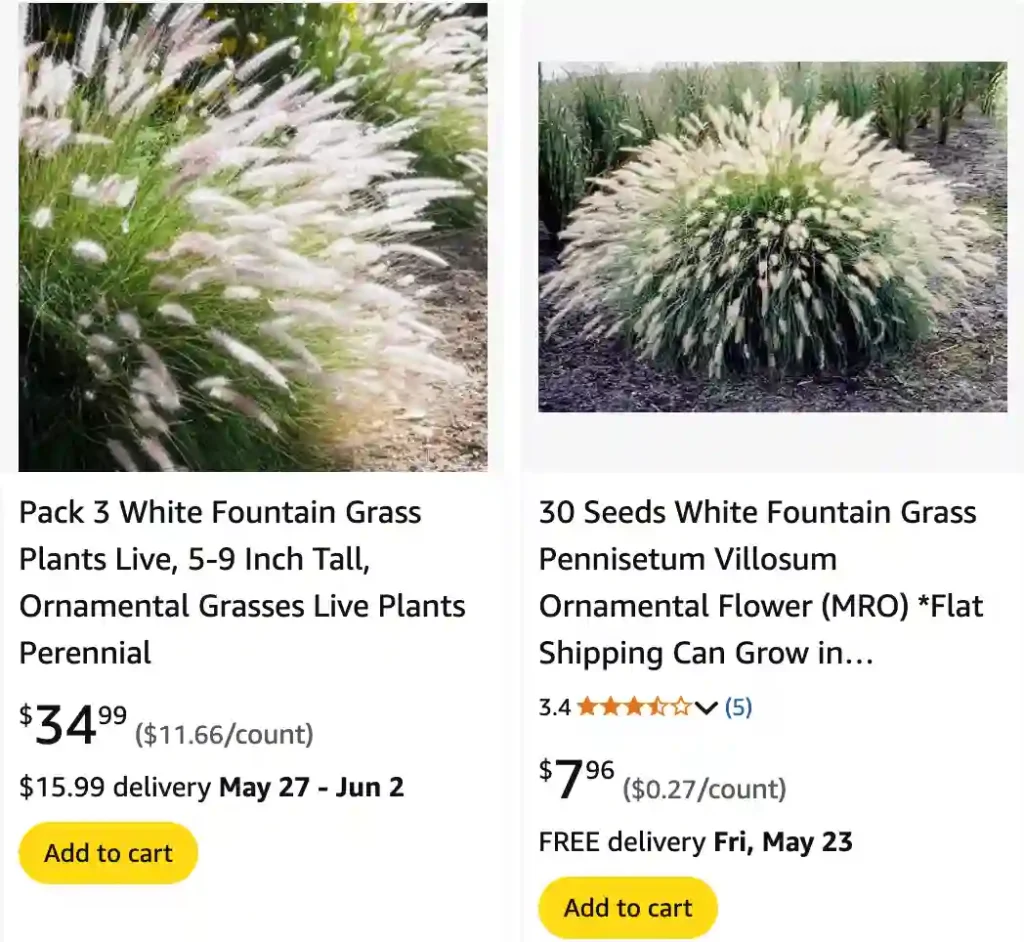
This plant is a clump-forming, warm-season grass. What sets it apart is its silky white plumes that arch like little fireworks in the wind. The foliage is narrow, lush green, and gently drooping. At its peak, it reaches about 3 to 4 feet tall and 2 to 3 feet wide.
I love how this grass creates motion and texture without stealing the spotlight. It’s ideal in borders, containers, or even in mass plantings. Plus, it’s deer-resistant, drought-tolerant, and low-maintenance once established.
Is White Fountain Grass Invasive?
Here’s the short answer: Yes, but only in certain regions.
White Fountain Grass is a cultivar of Pennisetum Setaceum, which is known to be aggressively invasive in places like California, Hawaii, and parts of Florida. I always check with my local extension office or state invasive species list before planting.
In my cooler zone garden, I grow it as an annual or in containers, which gives me control and zero risk of escape.
How Do I Grow and Care for Pennisetum Setaceum ‘Alba’?
This grass is easy to care for—my kind of plant.
- Sunlight: It craves full sun. Less than 6 hours of direct light, and you won’t get the beautiful, billowy plumes.
- Soil: It thrives in well-draining soil. I mix in sand if my soil holds too much moisture.
- Watering: Once established, it’s very drought-tolerant. During the first few weeks, I water regularly. After that, it only needs water during prolonged dry spells.
- Fertilizing: I don’t go heavy. A light application of balanced fertilizer in spring gives it a good boost.
- Pruning: I cut it back hard in late winter or early spring if overwintering in warm zones.
Can White Fountain Grass Survive the Winter?
Not in most regions.
Pennisetum Setaceum ‘Alba’ is only hardy in USDA Zones 9 to 11. In colder areas, it won’t survive the frost. I treat it as an annual or overwinter it indoors. Sometimes I dig it up, pot it, and keep it in a garage with minimal water until spring.
How Does It Compare to Purple Fountain Grass?
I’ve grown both, and here’s my take:
| Feature | White Fountain Grass | Purple Fountain Grass |
|---|---|---|
| Foliage | Bright green | Deep burgundy |
| Plumes | Silky white | Reddish-purple |
| Visual Effect | Airy, soft, ethereal | Bold, dramatic, exotic |
| Light Reflection | Shimmers in sunlight | Adds contrast in shadows |
If your landscape needs light and grace, choose White Fountain Grass. For contrast and depth, go Purple.
Is It Good for Pollinators or Wildlife?
Yes—and no.
The plumes are wind-pollinated, so they don’t offer nectar for bees or butterflies. But the dense clumps provide shelter for small birds, and birds often perch on the grass heads.
In my wildlife-friendly garden, I mix it with echinacea, rudbeckia, and salvia to balance beauty with biodiversity.
Can I Grow It in Pots?
Absolutely. And I do it often.
White Fountain Grass looks spectacular in containers—especially tall, narrow ones. I use a lightweight, fast-draining mix and water it a bit more since pots dry out faster. It’s a smart way to contain its roots and move it into the garage in winter.
Does It Work in Xeriscaping or Dry Gardens?
Yes. In fact, it shines in those settings.
Its drought-tolerance, low nutrient needs, and sun-loving habit make it a top performer in xeriscapes, rock gardens, and Mediterranean-style landscapes. Pair it with lavender, yucca, and agave, and you’ve got a sculptural, low-care design that thrives on neglect.
What Plants Pair Well with It?
Here’s what I’ve had success with:
- Gaura (Whirling Butterflies) – Their white blooms dance in rhythm with the grass.
- Salvia ‘Mystic Spires’ – Deep blues next to green foliage make the plumes pop.
- Coreopsis ‘Moonbeam’ – The soft yellow matches the airy feel.
- Agastache – Adds height and attracts pollinators nearby.
The key is choosing plants with contrasting textures or harmonious tones.
Final Thoughts: Is White Fountain Grass Worth It?
For me—absolutely.
I grow it every year, whether in-ground or in containers. It offers a soft, flowing presence without being flashy. It’s ideal if you love ornamental grasses but want something with a light color palette, especially for modern, coastal, or minimalistic garden styles.
Just be mindful of its spread in warm regions. Otherwise, it’s a stunner you’ll fall in love with year after year.

If i die, water my plants!