I’m Ferb Vu. I’ve spent years growing plants in both sunny and shady spots. And let me tell you—Wildflower Plants for Shade can be just as vibrant as those sun-loving blooms. You just need to know what to plant, where, and how to make it thrive. I’ve put together this guide to answer the most common questions I get about shade-loving wildflowers. Let’s dig in.
What Are the Best Wildflower Plants for Shade?
Not all wildflowers crave the sun. Some prefer cool, dappled light beneath trees or in the north-facing corners of your yard.
Here are my top performers:
- Columbine (Aquilegia canadensis) – One of my favorites. These red and yellow blooms attract hummingbirds and grow well in part shade.
- Wild Ginger (Asarum canadense) – Not showy, but excellent as a shady ground cover. It thrives under dense canopy.
- Virginia Bluebells (Mertensia virginica) – Soft, sky-blue flowers in early spring. They go dormant after blooming, so plant them with ferns or other summer interest plants.
- Solomon’s Seal (Polygonatum biflorum) – Arches beautifully and handles deep shade well. The creamy bell-shaped flowers hang beneath its stems.
- Woodland Phlox (Phlox divaricata) – Fragrant, colorful, and spreads over time. Pollinators love it.
- Bloodroot (Sanguinaria canadensis) – Short bloom time, but stunning white petals in early spring. A native ephemeral must-have.
These plants all belong in shade-tolerant wildflower gardens. They are low-maintenance, native-friendly, and often deer-resistant.
Can Wildflowers Grow in Full Shade?
Yes—but with a few caveats. “Full shade” means no direct sun at all. That’s tough for most flowering plants. But I’ve had luck with a few:
- Trilliums (Trillium grandiflorum) – Iconic in woodland gardens. Slow to spread, but worth the wait.
- Jack-in-the-Pulpit (Arisaema triphyllum) – Weird and wonderful. Adds texture to dark corners.
- Ferns and mosses – While not “wildflowers” in the technical sense, they mix well and keep the forest floor lush.
In full shade, expect fewer blooms and slower growth. But if you create a layered understory with native shade plants, you’ll get balance and beauty.
How Do Shade Wildflowers Compare to Sun-Loving Wildflowers?
I’ve grown both, and here’s the key difference:
- Shade wildflowers tend to bloom earlier, with shorter blooming periods.
- Sun wildflowers are often taller, with bright colors and longer flowering windows.
In shade gardens, foliage texture matters more. You rely on leaf shapes and subtle color contrasts. Sun gardens can wow with riotous color—but shade gardens whisper with elegance.
For example, compare Black-Eyed Susan (Rudbeckia hirta) with Virginia Bluebells. The Susan shouts with golden petals all summer long. Bluebells bloom early and fade, leaving room for ferns to rise. Different styles—both beautiful.
What Are Good Companion Plants for Shade Wildflowers?
You want balance, contrast, and seasonal coverage. Here’s what I use:
- Hostas – Large, bold leaves create contrast.
- Ferns (like Lady Fern or Maidenhair) – Airy textures balance dense ground covers.
- Foamflower (Tiarella cordifolia) – Lush foliage and starry blooms in spring.
- Heuchera (Coral Bells) – Offers year-round color with varied leaf tones.
Companions help prevent bare spots, control weeds, and boost pollinator visits. Group shade perennials by bloom time and height to keep interest going year-round.
Are Wildflowers for Shade Native to North America?
Many of them are—and that’s why I use them. Native plants support local bees, butterflies, and birds. They’re adapted to local soils and weather.
Here are some top native picks I grow:
- Solomon’s Seal
- Virginia Bluebells
- Trillium
- Wild Columbine
- Wild Geranium (Geranium maculatum)
These plants not only thrive with little fuss, they restore the local ecosystem. That’s a win for both beauty and biodiversity.
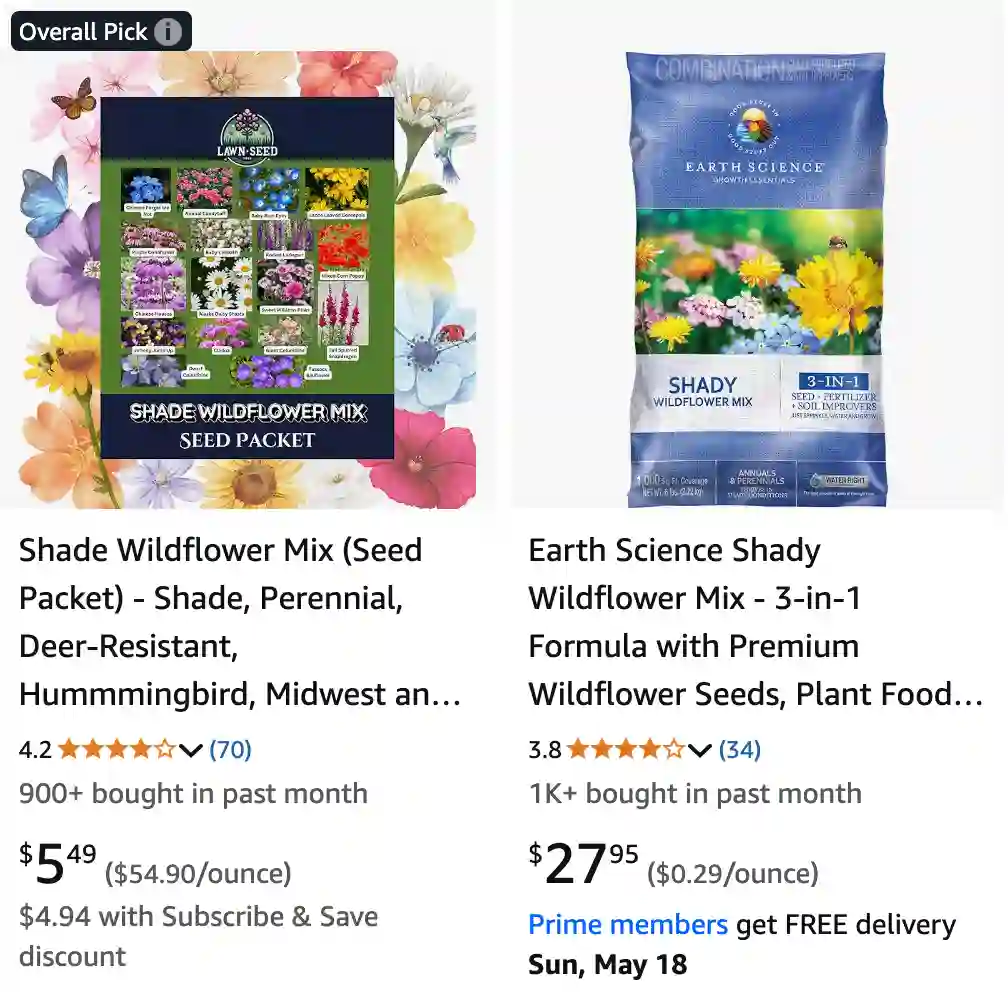
Can I Use a Wildflower Seed Mix for Shade?
Yes, but with caution. Many commercial mixes are geared for sun. Read the label. Look for shade-tolerant species like:
- Jacob’s Ladder (Polemonium reptans)
- Self-Heal (Prunella vulgaris)
- Celandine Poppy (Stylophorum diphyllum)
I’ve had the best results when I blend my own mix. I buy single-species seeds and create custom combos. I mix in leaf mulch or fine compost to improve seed-soil contact. Keep it moist until germination.
Do Shade Wildflowers Attract Pollinators?
Absolutely. Bees, butterflies, and hummingbirds all visit shade blooms—especially in early spring when forest plants flower before the trees leaf out.
- Columbine draws hummingbirds.
- Woodland Phlox brings in swallowtails.
- Wild Geranium is a bee favorite.
Add a few native grasses or sedges, and you’ll invite even more beneficial insects. Remember, pollinators need continuous bloom. Layer your garden for early, mid, and late-season flowers.
Final Thoughts from My Garden
Shady spots can be tricky—but they don’t have to be boring. With the right wildflower plants for shade, you can turn that dim corner into a woodland retreat full of subtle beauty and vital life.
My advice? Think beyond flowers. Embrace foliage, timing, and texture. Blend native perennials, ephemerals, and ground covers. And don’t be afraid to experiment.
I’ve seen shady wildflower gardens become the most peaceful, serene parts of a yard. They’re quiet, soft, and full of surprises.

If i die, water my plants!