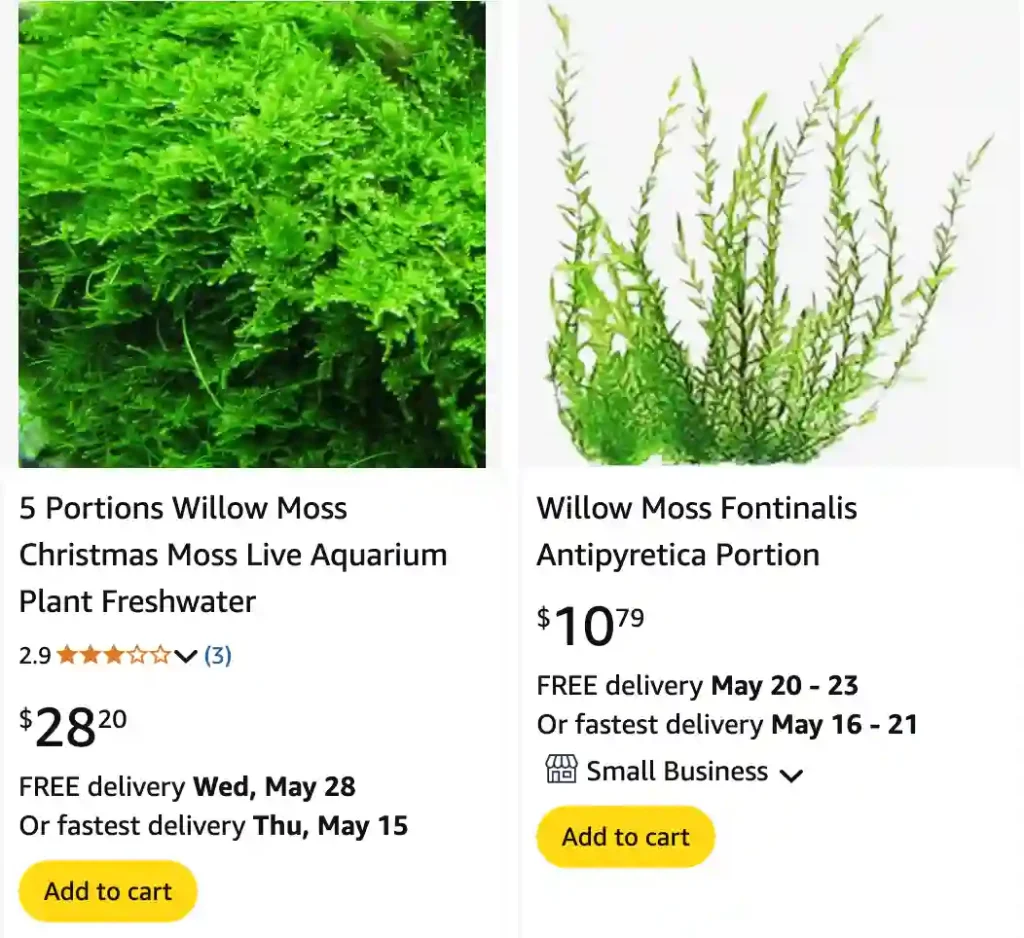
I’ve worked with many aquatic plants, but Willow Moss (Fontinalis Antipyretica) stands out. It’s not just any moss—it’s a cold-water champion, a stream dweller, and a hardy choice for nature lovers. Below are some of the most common questions I’ve answered over the years. I’m sharing what I’ve learned through hands-on experience and observation.
What Is Willow Moss?
Willow Moss, known scientifically as Fontinalis Antipyretica, is a submerged aquatic moss. It grows attached to rocks, wood, or even free-floating in cold, clear streams and lakes. It belongs to the Fontinalaceae family, and it’s native to Europe, North America, and parts of Asia.
Its stems are dark green or olive, with dense, feathery leaves. Unlike many aquatic mosses, it thrives in low-light, oxygen-rich environments and cooler water, typically under 75°F (24°C).
Semantic Entities: aquatic moss, Fontinalaceae, submerged plants, oxygenation, riparian ecosystems, bryophytes.
Is Willow Moss the Same as Java Moss?
No. They may look similar, but they behave differently.
Java Moss (Taxiphyllum Barbieri) is tropical, more tolerant of warm water, and spreads faster. Willow Moss grows slower, prefers colder water, and has a more elegant, weeping structure. In my tanks, Willow Moss always wins for creating a soft, natural forest stream look.
| Feature | Willow Moss | Java Moss |
|---|---|---|
| Water Temperature | 50–75°F (10–24°C) | 68–86°F (20–30°C) |
| Growth Rate | Slow | Fast |
| Appearance | Long, fine, flowing stems | Bushy, random branching |
| Light Requirement | Low to Medium | Low |
Can I Use Willow Moss in My Aquarium?
Yes, but it depends on your setup.
If your tank stays under 75°F (24°C) and has good water flow, Willow Moss is ideal. I use it in coldwater tanks and planted stream biotopes. It clings well to rocks and driftwood with no glue needed. It also helps with nitrate absorption, offers hiding spaces for shrimp and fry, and adds aesthetic depth.
Be patient—it grows slow. But once it takes hold, it becomes a lush, draping feature.
How Do I Attach Willow Moss?
Here’s my go-to method:
- Find a porous rock or piece of driftwood.
- Gently tie the moss with cotton thread or use mesh wrap.
- Place it in a shaded, high-flow area of the tank.
- Wait. It will anchor naturally in a few weeks.
Cotton thread will dissolve as the moss attaches. Avoid using glue—it can kill the plant and stunt growth.
Does Willow Moss Need CO₂ or Fertilizer?
Not necessarily. Willow Moss is not a heavy feeder.
I don’t add CO₂ to my moss tanks. Low light and a rich substrate are enough. It does benefit from trace minerals like iron and magnesium. In nutrient-poor setups, a light liquid fertilizer dose once a week boosts its health.
Can Willow Moss Grow in Ponds?
Yes, but only in cool climates or shaded ponds.
I’ve tried it in my backyard pond in early spring. It did well until the water got too warm in midsummer. Fontinalis Antipyretica prefers temperatures under 75°F. If you’re in a temperate zone, it might survive year-round in the pond’s deeper, cooler areas.
How Does Willow Moss Compare to Riccia Fluitans?
Great question.
Riccia Fluitans (Crystalwort) is a floating liverwort with a soft, bubble-trapping texture. It thrives in high light and CO₂. Willow Moss, by contrast, stays submerged and is more tolerant of low-tech setups.
If I want surface cover and oxygen bubbles, I go with Riccia. If I want dense underwater foliage, Willow Moss is my pick.
Is Willow Moss Good for Breeding Tanks?
Yes, it’s excellent.
Baby fish and shrimp love hiding in its delicate leaves. The moss hosts microorganisms—a natural food source for fry. It also filters out excess nutrients and stabilizes water chemistry. I always keep a clump in my shrimp tank.
How Do I Prune or Propagate Willow Moss?
It’s simple.
Use sharp aquascaping scissors to trim overgrowth. Cut just above the node. The cuttings can be tied to a new surface. I often let loose strands float for a while until they anchor themselves. Propagation is slow, but worth it.
Does Willow Moss Fight Algae?
To an extent.
In my experience, dense Willow Moss growth shades lower areas and outcompetes algae for nutrients. But it’s not a silver bullet. Keep the light low, flow strong, and nutrients balanced. That’s how you prevent algae.
Final Thoughts
Willow Moss – Fontinalis Antipyretica – is a true gem for natural aquascapes. It may not grow fast or grab attention like flashier plants, but it brings unmatched texture and function. If your tank or pond runs cool and you like the look of nature’s streambed, this moss delivers.
I’ve used it in river tank setups, shrimp tanks, and even outdoor projects. It’s never disappointed me. Just give it time, keep it cool, and let it do its magic.

If i die, water my plants!