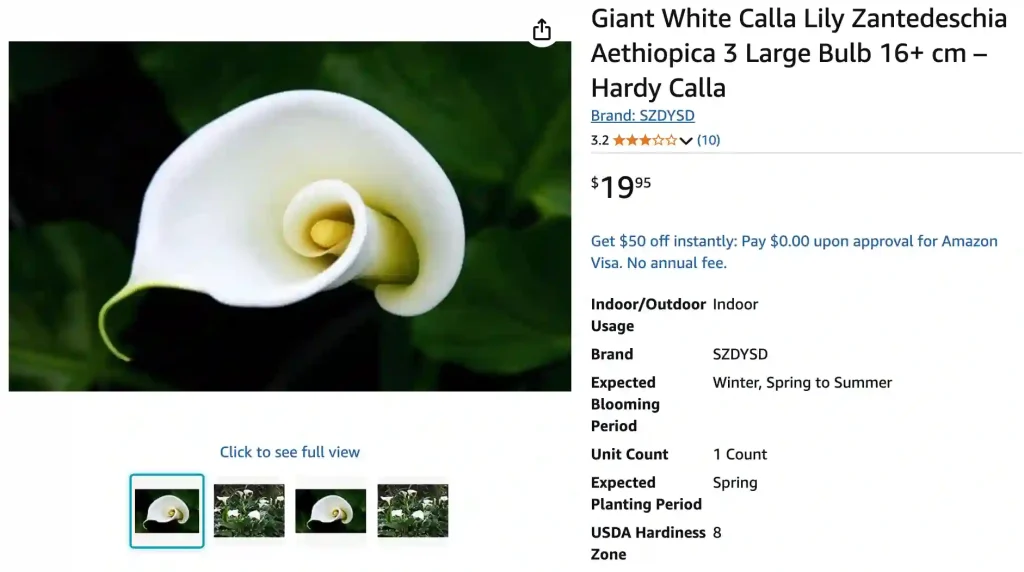
Over the years, I’ve developed a deep admiration for Zantedeschia Aethiopica, also known as the Calla Lily or Arum Lily. With its striking white blooms and bold, arrow-shaped leaves, this plant has earned a permanent spot in my garden. It’s elegant, architectural, and, surprisingly, quite hardy when you treat it right. I’ve answered many questions about this plant, and I’m here to share everything I’ve learned — the FAQs I get the most.
What Is Zantedeschia Aethiopica?
Zantedeschia Aethiopica is a rhizomatous perennial native to southern Africa. It belongs to the Araceae family. The large white spathes aren’t actually petals but modified leaves that protect the tiny flowers in the central spadix. The plant thrives in moist, boggy areas in the wild, often near water bodies. This trait gives you a clue to one of the most important care tips: keep its roots consistently moist.
How to Grow Zantedeschia Aethiopica?
The first question I always get is, how to grow Zantedeschia Aethiopica successfully? Start with location. This plant prefers partial shade, especially in hotter climates. However, in cooler zones, full sun can encourage better flowering.
Soil matters a lot. I always plant mine in rich, well-drained loam. Amend with compost or organic matter if your soil is too sandy or clay-heavy. The key is moisture retention without sogginess. I’ve found that mulching around the base helps maintain consistent soil hydration and keeps roots cool.
Watering is critical. Zantedeschia isn’t drought-tolerant like some lilies. During the growing season (spring to early fall), I water regularly — about 2 to 3 times per week depending on weather. Once established, it can tolerate short dry spells, but I’ve noticed flowering drops off sharply if the plant gets too thirsty.
Fertilization is another important aspect. I feed mine every four weeks with a balanced, water-soluble fertilizer. High-nitrogen feeds encourage more foliage, but for better blooms, a phosphorus-boosted mix works wonders.
How to Plant Zantedeschia Aethiopica Bulbs?
Here’s another one I hear often: how to plant Zantedeschia Aethiopica bulbs (technically, rhizomes). Timing matters. I always plant mine in early spring once the danger of frost has passed. In USDA zones 8 to 10, they can be planted directly in the garden. For colder zones, containers or seasonal lifting are necessary.
I plant each rhizome 3 to 4 inches deep, eyes facing up, and space them about 12 inches apart to allow for mature spread. Once planted, I water thoroughly to settle the soil. Within a few weeks, shoots emerge and the iconic foliage follows.
In containers, I use a moisture-retentive mix and ensure good drainage. A saucer beneath the pot helps mimic the plant’s natural marshy conditions without causing root rot. Indoors or outdoors, always avoid letting the soil dry out completely.
Can Zantedeschia Aethiopica Grow in Water?
Yes, but with caveats. I’ve grown Zantedeschia Aethiopica in shallow ponds or water gardens. The roots can sit in water, but only if they have access to oxygen. Stagnant water or lack of flow can cause rot. Aerated water and occasional soil breaks are essential.
Is Zantedeschia Aethiopica Invasive?
In ideal conditions, it can naturalize. In fact, in parts of Australia and California, it’s considered invasive due to its ability to spread in wetlands. In my garden, I control its spread by removing spent flowers and dividing rhizomes every few years.
How Do You Overwinter Zantedeschia Aethiopica?
In colder climates (zones 7 and below), I dig up the rhizomes after the first frost. I let them dry for a few days in a shaded area, then store them in peat moss in a cool, dry place. In containers, I bring them inside and keep them in a bright, cool room until spring.
Common Problems
Aphids and spider mites occasionally attack the foliage. I use insecticidal soap or neem oil when needed. Root rot is the biggest enemy — usually a result of poor drainage. Always plant in breathable, aerated soil and avoid letting water stagnate.
Final Thoughts
Learning how to grow Zantedeschia Aethiopica and how to plant Zantedeschia Aethiopica bulbs changed the dynamic of my garden. It’s a plant that commands attention without overwhelming the space. Whether lining a pond, tucked into a shady border, or making a statement in a container, it brings texture, grace, and a surprising level of resilience.

If i die, water my plants!