Over the years, I’ve grown fond of Willow Shrubs—their movement, texture, and variety never fail to add energy and softness to my garden. But as with any plant family, there’s always a wave of questions that come up. Whether you’re looking at a Flamingo Willow Shrub, a Pussy Willow Shrub, or the elegant Nishiki Willow Shrub, these plants invite curiosity. So, I’ve put together the most frequently asked questions I get or had myself, along with what I’ve learned firsthand from growing and observing these graceful beauties.
What Are the Most Popular Willow Shrub Varieties?
There’s a Willow Shrub for almost every taste. Some of my favorites include:
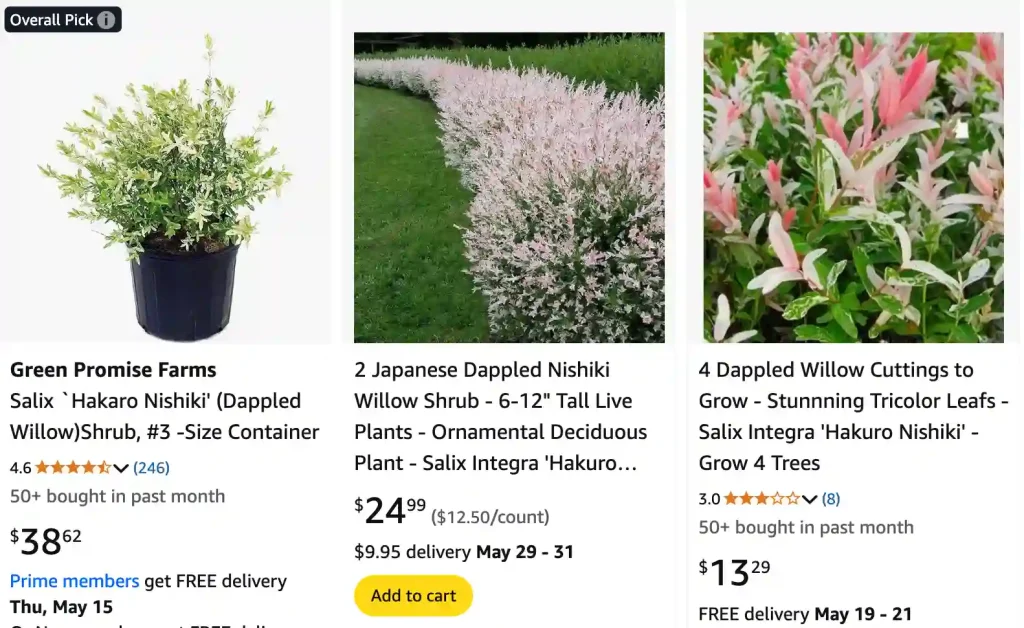
- Variegated Willow Shrub (Salix integra ‘Hakuro Nishiki’) – Famous for its pink, white, and green foliage. A real show-stopper, especially in early spring.
- Flamingo Willow Shrub – Very similar to the Nishiki but with deeper blush tones. Looks like a cloud of cotton candy when in peak color.
- Japanese Willow Shrub – Another name often used for Nishiki or other Salix integra cultivars. These are beloved for their ornamental foliage.
- Pussy Willow Shrub (Salix discolor) – Known for its soft catkins in early spring. Kids love petting them. So do adults.
- Arctic Willow Shrub (Salix purpurea ‘Nana’) – A compact, hardy option with fine blue-green leaves.
- Tricolor Willow Shrub – An eye-catching blend of pink, white, and green—less known but equally beautiful.
- Brocade Willow Shrub – Adds a warm, tapestry-like touch to the landscape.
- Flame Willow Shrub (Salix alba ‘Flame’) – Bright orange-red winter stems. Stunning in bare landscapes.
- Desert Willow Shrub (Chilopsis linearis) – Despite the name, it’s not a true willow but has similar form. It thrives in hot, dry regions.
- Curly Willow Shrub / Corkscrew Willow Shrub (Salix matsudana ‘Tortuosa’) – Twisted stems make for great winter interest and floral arrangements.
- Red Willow Shrub, White Willow Shrub, Blue Willow Shrub, Golden Willow Shrub, Pink Willow Shrub, Silver Willow Shrub – Each with their own unique seasonal flair and color palette.
Are Willow Shrubs Good for Privacy?
Absolutely. I’ve planted Willow Shrubs for privacy along my fence lines. Their fast growth, thick foliage, and ability to handle shaping make them excellent green screens. The Arctic Willow and Flame Willow are my top picks for this purpose.
When and How to Prune a Willow Shrub?
I get asked “When to prune Willow Shrub?” all the time. I prune in late winter or very early spring, just before the buds break. Here’s how to prune a Willow Shrub:
- Use sharp, clean loppers or pruners.
- Cut back about a third of the older stems to the base to encourage new growth.
- Remove dead or damaged wood.
- For formal shapes, clip for symmetry but keep the natural form in mind.
For Curly Willow Shrubs, pruning enhances the spirals. For Hakuro Nishiki Willow Shrub, hard pruning each year keeps the variegation crisp and the shape compact.
Are Willow Shrubs Deciduous?
Yes, all Willow Shrubs I’ve worked with are deciduous. They shed their leaves in fall, revealing striking stems, especially in varieties like Red, Flame, and Golden Willow Shrubs.
Are Willow Shrubs Invasive?
Some can be. Willows love water and have aggressive roots. In my experience, Salix Willow Shrubs near water lines or foundations can cause problems. I always plant at least 15–20 feet from structures and use root barriers when needed.
How to Care for a Willow Shrub?
How to care for Willow Shrub boils down to four things:
- Sunlight: Full sun to part shade.
- Water: Keep soil moist, especially in the first year.
- Pruning: Annually, as mentioned.
- Soil: Tolerant of various types but prefers loamy, well-drained spots.
They’re low-maintenance if placed right.
Do Deer Eat Willow Shrubs?
Sadly, yes. I’ve had deer eat Willow Shrubs, especially tender shoots in spring. If you’re in a deer-heavy area, use repellents or fencing until plants mature.
What Eats Willow Shrubs?
Besides deer, rabbits and rodents sometimes nibble the bark in winter. Aphids and leaf beetles can also show up, but I control them with neem oil or insecticidal soap when needed.
How to Identify a Willow Shrub?
Here’s how to identify Willow Shrub:
- Leaves: Lance-shaped, often narrow. Some are finely serrated.
- Bark: Usually smooth and gray; can be colorful on younger stems.
- Growth Habit: Graceful, arching branches or dense, upright forms.
- Catkins: Many species have fuzzy spring flowers before leaf-out.
Look closely—each Willow Shrub variety tells its own story in shape, texture, and color.
Final Thoughts
I think of Willow Shrubs as dynamic, ever-changing plants. They’re among the few that offer four-season interest—from catkins and colorful foliage to winter twigs. Whether it’s the painterly charm of the Tricolor Willow Shrub, the twisted artistry of the Corkscrew Willow Shrub, or the vibrant stems of the Red or Golden Willow Shrub, there’s always something to enjoy.
If you’re designing a garden or just experimenting like me, don’t overlook the Willow Shrub family. With the right variety and care, they reward you handsomely.

If i die, water my plants!