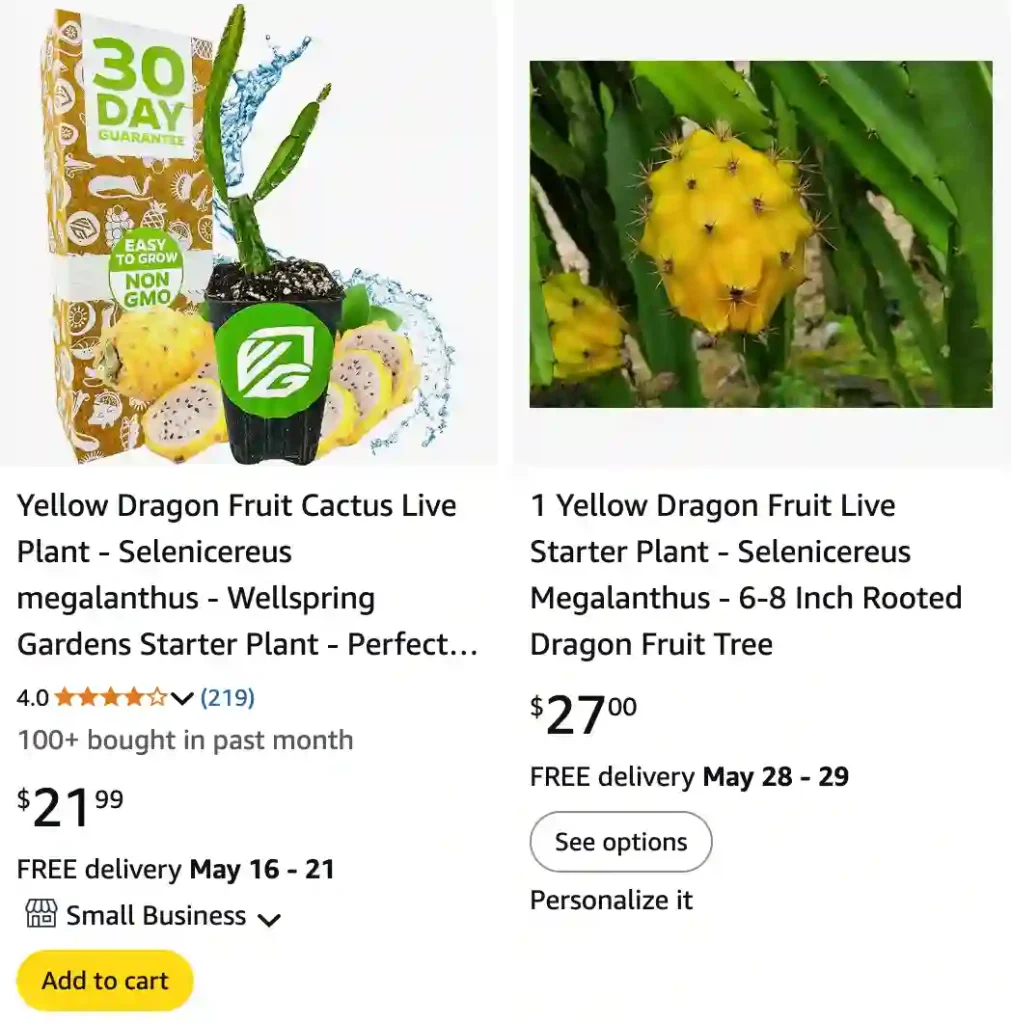
I’ve always been drawn to the exotic. When I first saw the Yellow Dragon Fruit Plant – Selenicereus Megalanthus, it was love at first sight. With its spiny, sprawling cactus limbs and the promise of bright yellow, sweet, spiky-skinned fruit, I knew it had to join my garden. Over the years, I’ve answered countless questions from fellow gardeners about this unique plant. So, I’ve decided to gather the most frequent ones here—along with my firsthand experience.
30 Species in Genus Selenicereus
What Is Yellow Dragon Fruit – Selenicereus Megalanthus?
Yellow Dragon Fruit is a tropical cactus native to South America. It’s not the same as the red-skinned dragon fruit. This one has yellow skin and white, super-sweet flesh. Its scientific name, Selenicereus Megalanthus, hints at its nocturnal blooming nature. Flowers bloom under moonlight—large, white, and fragrant. The fruit is prized for its honey-like taste and high antioxidant content.
How To Plant Yellow Dragon Fruit
Let’s get this out of the way first, because “how to plant yellow dragon fruit” is a question I get often.
Start with a cutting or a seed. I recommend cuttings. They’re faster to fruit and easier to root. Choose a healthy stem segment, at least 12 inches long.
Step-by-step:
- Dry the cutting: Leave it in a dry, shaded place for 5–7 days. Let the wound callous to prevent rot.
- Use cactus potting mix: The soil must be sandy, well-draining, and slightly acidic (pH 6–7).
- Plant vertically: Insert the cutting 2–3 inches deep. Keep the planting angle straight so the plant doesn’t twist as it grows.
- Support it: Yellow dragon fruit is a climbing cactus. Use a wooden stake, trellis, or concrete post.
- Place in full sun: At least 6–8 hours of sunlight daily.
I’ve had the best success growing them in raised beds with a sturdy trellis system. They thrive in zones 10–11 but can be grown in containers and overwintered indoors in cooler regions.
Yellow Dragon Fruit Plant Care
Now comes the long game—yellow dragon fruit plant care. It’s not high maintenance, but consistency is key.
- Watering: Deep, infrequent watering is ideal. Let the soil dry out between waterings. Overwatering causes root rot, especially in clay soils.
- Feeding: Use a balanced fertilizer every month during the growing season. I personally switch to a low-nitrogen fertilizer once the plant starts flowering.
- Pruning: Yes, you need to prune. Cut away weak, overcrowded, or diseased stems. This directs energy to fruit production and improves airflow.
- Pollination: Selenicereus Megalanthus is self-sterile. It needs cross-pollination with another plant of the same species. Hand-pollinate at night using a soft brush. It’s tedious but rewarding.
If grown right, each mature vine can yield up to 3–4 fruiting cycles per year.
How Long Until It Fruits?
Patience pays off. From cutting to harvest can take 12 to 18 months. Mine started blooming after 16 months. But I’ve heard stories of fruiting as early as 12 months if conditions are perfect.
Can I Grow It Indoors?
Yes, but with caveats. It needs strong light—ideally a south-facing window or grow light. You’ll also need to mimic natural conditions: warmth, humidity, and nighttime pollination. Container size matters too. Use a pot at least 10–15 gallons in volume.
Is It Different from Other Dragon Fruits?
Absolutely. Selenicereus Megalanthus has spikes on the fruit skin, unlike the smooth varieties of Hylocereus. The fruit is also smaller but much sweeter—what I consider the sweetest dragon fruit of all. The flesh is snow white, with tiny edible black seeds. It’s almost syrupy, reminding me of honeydew melon and kiwi fused into one.
What Pests or Diseases Should I Watch For?
Common issues include:
- Aphids and mealybugs: Use neem oil or insecticidal soap.
- Root rot: Prevent by ensuring good drainage.
- Fungal infections: Prune regularly and avoid wetting the stems.
I use a diluted copper fungicide during the wet season and inspect weekly for early signs of stress or pests.
Final Thoughts
Growing Yellow Dragon Fruit – Selenicereus Megalanthus is more than just cultivating an exotic fruit. It’s a commitment to rhythm and routine. The moonlit blooms, the anticipation of fruit, and the satisfaction of harvesting something so rare make it deeply rewarding. Every year, when I bite into that sweet, translucent pulp, I’m reminded why I started.
If you’re wondering how to plant yellow dragon fruit or maintain excellent yellow dragon fruit plant care, know that it’s not difficult—just different. Follow the plant’s natural instincts. Mimic its native habitat. Respect its timing. And above all, stay curious.

If i die, water my plants!