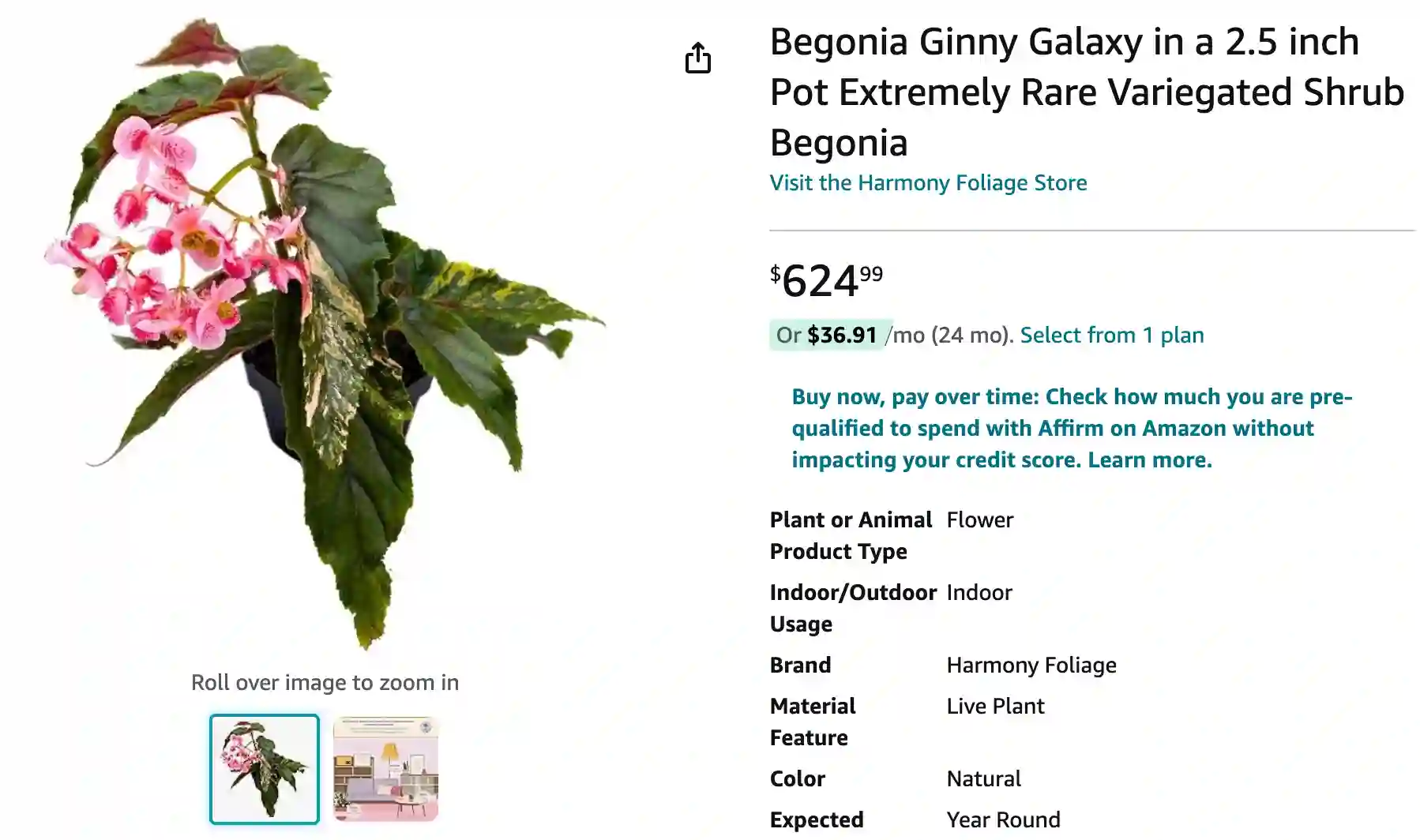
In the vast and varied universe of houseplants, some specimens truly shine, capturing the imagination with their celestial beauty. Among these stellar performers is the Begonia ‘Ginny Galaxy’, a plant that has rapidly ascended to star status among collectors and enthusiasts alike. Renowned for its extraordinarily vibrant, multi-hued foliage, this begonia promises a spectacle of evolving colors that evoke the swirling nebulae and distant stardust of its namesake.
More than just a pretty face, the ‘Ginny Galaxy’ is a testament to horticultural artistry, being a variegated sport of the already charming Begonia ‘Ginny’. Its leaves are a canvas of lime green, sunshine yellow, and delicate pink, a living, breathing artwork that shifts and deepens with maturity and optimal care. Unlike some temperamental variegated plants, the ‘Ginny Galaxy’ stands out for its relatively stable variegation, a trait that makes it both a rewarding and less frustrating cultivation experience.
This comprehensive guide will delve deep into every facet of nurturing a Begonia ‘Ginny Galaxy’, from its ideal environmental conditions to troubleshooting common challenges. We will unravel the secrets to unlocking its full chromatic potential and ensure it thrives in your care. Moreover, we’ll embark on a unique, first-person “time-lapse” journey, chronicling the growth of my very own ‘Ginny Galaxy’ over two transformative years, sharing the triumphs and lessons learned along the way.
Unveiling the Cosmic Charm: What Makes Begonia ‘Ginny Galaxy’ So Special?
The Begonia ‘Ginny Galaxy’ is a hybrid begonia that belongs to the shrub-like (or cane) begonia group, characterized by their upright, bushy growth habit and distinct, often jointed, stems. As a ‘sport’ variety, it emerged as a natural mutation from the original Begonia ‘Ginny’, inheriting its robust structure while developing a breathtaking display of variegated foliage.
Its elongated, lance-shaped leaves are the true stars of this plant. Each leaf unfurls with an initial lime-green hue, gradually transitioning through shades of bright yellow before maturing into a stunning, often iridescent, pink or even reddish-pink. This dynamic color progression, coupled with its mottled, galaxy-like patterns, ensures that no two leaves are exactly alike, offering a constantly evolving visual feast. The undersides of the leaves often carry a reddish flush, adding another layer of depth to its appearance.
Beyond its foliage, the ‘Ginny Galaxy’ also produces charming flowers. Pink buds, often adorned with striking red hairs, open to reveal delicate white blooms with subtly serrated margins. While the flowers are certainly an attractive bonus, it is the kaleidoscopic leaves that remain the primary draw for most admirers.
What truly sets ‘Ginny Galaxy’ apart from many other variegated plants is the stability of its variegation. While no variegated plant is entirely immune to reverting (where portions of the plant lose their colorful patterns and return to solid green), ‘Ginny Galaxy’ is notably less prone to this phenomenon, making it a more reliable choice for those seeking consistent ornamental value.
The Gardener’s Time-Lapse Journal: Year 1 – From Cuttings to First Blooms
- Month 1 (Acquisition & Hopeful Beginnings): “It was a cool spring afternoon when my Begonia ‘Ginny Galaxy’ arrived. Not a fully grown plant, mind you, but two small, unrooted stem cuttings I’d acquired from an online enthusiast. They were delicate, each with just a couple of small, faintly variegated leaves. My heart beat a little faster; this was a species I’d been yearning for. I prepared a fresh batch of my go-to aroid mix: plenty of perlite for drainage, some fine orchid bark, and a good quality peat-based potting mix. I carefully dipped the cut ends in rooting hormone, then gently nestled them into small, separate pots, making sure the top inch of soil was just barely moist. A clear plastic bag went over each, creating a makeshift humidity dome, and they were placed under a grow light, ensuring bright, indirect light without any direct sun.”
- Month 2 (The Waiting Game & First Roots): “The first few weeks were a test of patience. I resisted the urge to constantly check for roots, instead focusing on maintaining consistent humidity and moisture. After about three weeks, I tentatively tugged on one cutting – a slight resistance! Roots! A wave of relief washed over me. By the end of Month 2, both cuttings had developed a small but healthy root system, visible through the clear nursery pots. The oldest leaves, though, showed signs of stress, yellowing slightly. It was a clear sign that the plants were putting all their energy into root development.”
- Month 3 (New Growth & Fading Yellow): “Just as the old leaves began to fade, tiny nubs appeared in the leaf axils – new growth! These nascent leaves were a vibrant lime green, tiny promises of the ‘galaxy’ to come. I started to remove the humidity domes for short periods each day, slowly acclimatizing the young plants to my home’s ambient humidity, which hovers around 50-60%. The yellowing on the oldest leaves subsided as the plants found their footing.”
- Month 4-6 (Variegation Unfurls & Bushy Development): “This was where the magic truly began. With each new leaf, the variegation became more pronounced. The lime green would mature into a creamy yellow, and then, as if touched by a painter’s brush, delicate pinks would blush along the margins and veins. They were still small, only about 6 inches tall, but the bushy growth habit was already evident. I started feeding them with a diluted balanced liquid fertilizer once a month, seeing a noticeable boost in vigor. I was also more diligent about watering, letting the top inch of soil dry before soaking them again – a vital lesson learned from past overwatering mistakes with other begonias.”
- Month 7-9 (Steady Growth & Preparing for Blooms): “My ‘Ginny Galaxy’ was becoming quite a specimen, reaching about a foot in height. Their stems were thickening, and the kaleidoscope of leaf colors was mesmerizing. I noticed small, pinkish nubs forming along the stems, tiny clusters of potential flower buds. I ensured they were receiving plenty of bright, indirect light, moving them closer to the grow light as the days shortened. This period was about consolidation and building strength for the upcoming flowering phase.”
- Month 10-12 (First Blooms & Winter Slowdown): “Just before the end of the first year, my ‘Ginny Galaxy’ rewarded me with its first blooms! Clusters of delicate white flowers, each with a charming serrated edge, emerged from the pink buds. They weren’t as flashy as the leaves, but they added a subtle elegance. As winter settled in, growth naturally slowed. I reduced watering frequency and held off on fertilization, respecting the plant’s natural dormancy cues. The established variegation remained vibrant, a beacon of color in the cooler months.”
The Stellar Care Guide for Begonia ‘Ginny Galaxy’
To truly witness the ‘Ginny Galaxy’ flourish and display its full chromatic potential, understanding and replicating its preferred environmental conditions is paramount.
1. Light: Illuminating the Galaxy
Requirement: Bright, indirect light is the undisputed champion for this begonia. Why it’s crucial: The intensity of light directly influences the vibrancy and stability of its variegation. Too little light, and the beautiful patterns may fade, resulting in a more uniform green. Conversely, direct, harsh sunlight, especially afternoon sun, will scorch its delicate leaves, leading to irreversible damage. Placement:
- Indoors: An east-facing window offers gentle morning sun. A few feet back from a south or west-facing window, or behind a sheer curtain, will provide ample bright, diffused light.
- Grow Lights: In environments with insufficient natural light, or during shorter winter days, supplemental LED grow lights are highly recommended. Position them to provide consistent, bright, indirect illumination for 10-12 hours a day. Observe your plant’s response; if leaves look washed out or bleached, it might be getting too much light; if variegation fades, it needs more.
2. Temperature & Humidity: Creating a Tropical Microclimate
Temperature: Requirement: Begonia ‘Ginny Galaxy’ thrives in warm, stable temperatures. Ideal Range: Aim for a consistent range between 60−75∘F (15−24∘C). While it can tolerate temperatures as low as 45∘F (7∘C) and as high as 95∘F (35∘C), sustained extremes can cause stress. Avoid: Sudden temperature fluctuations and cold drafts, which can shock the plant and lead to leaf drop or wilting. Keep it away from open windows in winter, air conditioning vents, and heating units.
Humidity: Requirement: Moderate to high humidity is essential. Ideal Range: 40−70%, with some sources suggesting up to 80% for optimal health. Being a tropical plant, it appreciates moisture in the air. Why it’s crucial: Low humidity can lead to crispy leaf edges, stunted growth, and make the plant more susceptible to pests like spider mites. How to increase humidity:
- Humidifier: The most effective method for consistent humidity.
- Pebble Tray: Place the pot on a tray filled with pebbles and water, ensuring the pot does not sit directly in the water (to prevent root rot). As the water evaporates, it increases localized humidity.
- Grouping Plants: Grouping plants together naturally increases humidity as they release moisture through transpiration.
- Avoid Misting: While seemingly helpful, misting often provides only temporary humidity and can encourage fungal diseases if water sits on the leaves, especially the fuzzy ones common to many begonias. Focus on ambient humidity.
3. Watering Needs: The Delicate Balance
Requirement: Consistent moisture without being waterlogged. General Rule: Water thoroughly when the top 1−2 inches of soil feel dry to the touch. This can be checked with your finger. Overwatering vs. Underwatering:
- Overwatering: This is a common killer of begonias. Constantly soggy soil suffocates roots, leading to root rot (mushy, black roots), yellowing leaves, and wilting. Ensure excellent drainage.
- Underwatering: While less common for catastrophic failure, prolonged dryness will cause leaves to wilt, crisp, and eventually drop. The plant will look limp and unhappy. Watering Technique:
- Water slowly and evenly until water drains from the bottom of the pot. Discard any excess water from the saucer within 15−20 minutes.
- Use filtered or rainwater if your tap water is heavily chlorinated or has high mineral content, as sensitive begonias can react negatively to harsh chemicals. Seasonal Adjustments: Reduce watering frequency during cooler, darker winter months when the plant’s growth naturally slows down.
4. Soil and Potting: A Well-Drained Foundation
Soil Requirement: A well-draining, airy, and slightly acidic to neutral potting mix. Ideal Mix: A good quality peat-based potting mix amended with plenty of perlite (at least 30%) and/or fine orchid bark. This ensures excellent aeration and prevents compaction, crucial for healthy root development and avoiding root rot. Potting:
- Pot Material: Terracotta pots can help wick away excess moisture, but plastic or glazed ceramic pots are also fine as long as they have drainage holes.
- Drainage Holes: Non-negotiable. Ensure your pot has adequate drainage holes to prevent waterlogging.
- Repotting: Repot only when the plant is root-bound (roots circling the bottom or emerging from drainage holes) or when the soil has become compacted and is no longer draining well. This typically occurs every 1−2 years, usually in spring. Choose a pot only 1−2 inches larger in diameter than the current one. Begonias generally prefer to be slightly pot-bound.
5. Fertilization: Fueling the Cosmic Display
Requirement: Regular feeding during the active growing season. Frequency: Fertilize once a month during spring and summer, when the plant is actively producing new leaves and potentially flowers. Fertilizer Type: Use a balanced liquid fertilizer (e.g., NPK ratio like 10-10-10 or 20-20-20) diluted to half or quarter strength. Begonias are sensitive to over-fertilization, which can burn roots. Avoid: Fertilizing in fall and winter when the plant’s growth slows or enters dormancy. There’s no need to push growth during these periods, and excess nutrients can build up in the soil.
The Gardener’s Time-Lapse Journal: Year 2 – Maturation & Expansion
- Month 13-15 (Post-Winter Rejuvenation): “Spring of the second year felt like a true awakening for my ‘Ginny Galaxy’. After a quiet winter, new growth surged with renewed vigor. The leaves, particularly those emerging now, displayed the most intense pink and yellow variegation I’d seen yet, a testament to the strong root system and established plant. I resumed my monthly feeding schedule and observed a rapid increase in size and bushiness.”
- Month 16-18 (Pruning for Shape & Health): “My ‘Ginny Galaxy’ was becoming quite a specimen, reaching nearly 1.5 feet in height. To encourage a bushier growth habit and maintain its attractive shape, I performed some selective pruning. I snipped off any leggy stems or those that were reverting to solid green, ensuring I cut just above a node. This also provided me with fresh cuttings to experiment with propagation, hoping to expand my ‘galaxy’ collection!”
- Month 19-21 (Propagation Success & New Generations): “The cuttings I took rooted remarkably quickly this time, perhaps due to the mother plant’s robustness. Within a few weeks, roots were clearly visible, and soon, tiny plantlets with their first hints of variegation began to emerge. It was incredibly satisfying to see these miniature versions of my beloved ‘Ginny Galaxy’ take root, knowing I was successfully expanding my collection and could potentially share with fellow plant enthusiasts.”
- Month 22-24 (Resilience & Continued Beauty): “As the second year drew to a close, my ‘Ginny Galaxy’ was a magnificent display. It had grown into a dense, vibrant bush, standing proud at nearly 2 feet tall. It had weathered a minor spider mite scare (quickly dealt with using insecticidal soap) and a brief period of faded variegation when I hadn’t given it enough light (rectified by moving it closer to a grow light). These challenges reinforced the importance of vigilance and adapting care. Its stable variegation continued to impress, making it a true centerpiece in my plant collection.”
Pruning & Shaping Your Galaxy: Maintaining its Form
While Begonia ‘Ginny Galaxy’ naturally grows into a bushy, shrub-like form, occasional pruning is beneficial for several reasons:
- Encourages Bushiness: Pinching back leggy stems encourages the plant to branch out, resulting in a fuller, more compact appearance.
- Maintains Shape & Size: Helps keep the plant within desired dimensions.
- Enhances Variegation: Promptly remove any stems or leaves that have reverted to solid green. These green portions photosynthesize more efficiently and can outcompete the variegated parts, potentially causing the entire plant to revert over time.
- Removes Damaged/Dead Foliage: Trim away any yellowing, brown, or damaged leaves to direct the plant’s energy towards healthy growth.
How to Prune:
- Use clean, sharp scissors or pruning shears to make clean cuts.
- Cut just above a leaf node (the point where a leaf or stem branches off). This encourages new growth from that node.
- The pruned stems can often be used for propagation!
Expanding Your Universe: Propagation of Begonia ‘Ginny Galaxy’
Propagating your Begonia ‘Ginny Galaxy’ is a rewarding way to create new plants and share its beauty. Stem cuttings are the most reliable method.
1. Stem Cuttings: The Most Reliable Method
Steps:
- Select a Healthy Stem: Choose a healthy, non-flowering stem with at least 2−3 nodes (leaf attachment points) and a few leaves. Aim for a cutting 4−6 inches long.
- Make a Clean Cut: Using sterilized, sharp scissors or a knife, make a clean cut just below a node.
- Remove Lower Leaves: Carefully remove any leaves from the bottom node(s) that would be submerged in water or buried in soil.
- Optional: Rooting Hormone: Dip the cut end in rooting hormone powder to encourage faster root development.
- Rooting Medium:
- Water: Place the cutting in a clear glass of water, ensuring only the bare stem (and no leaves) is submerged. Change the water every few days to keep it fresh. Roots typically appear within 2−4 weeks.
- Soil: Plant the cutting directly into a small pot filled with a well-draining, moist potting mix (like your begonia’s usual mix or a seed-starting mix). Ensure at least one node is buried.
- Provide Humidity: Cover the pot/glass with a clear plastic bag or place it in a propagation box to create a humid environment, which significantly increases success rates.
- Light & Warmth: Place the cuttings in a warm spot with bright, indirect light.
- Transplanting: Once roots are 1−2 inches long (for water cuttings) or new growth is evident (for soil cuttings), you can transplant them into their permanent pots.
2. Leaf Cuttings (with caveats)
While many begonia types (like Rex or Rhizomatous) readily propagate from leaf cuttings, shrub-like begonias like ‘Ginny Galaxy’ are cane begonias. Cane begonias generally do not produce new plants from leaf cuttings alone unless a portion of the stem with an active node is included. A leaf cutting might root, but it won’t produce a new plant. For ‘Ginny Galaxy’, stick to stem cuttings for reliable propagation.
Navigating Asteroid Fields: Common Pests and Diseases
Even the most well-cared-for ‘Ginny Galaxy’ can encounter issues. Vigilance and prompt action are key to maintaining a healthy plant.
Common Pests:
- Spider Mites: Tiny, almost invisible pests that thrive in dry, warm conditions. Look for fine webbing on leaves (especially undersides) and tiny yellow or speckled dots.
- Solution: Increase humidity, wipe leaves with a damp cloth, use insecticidal soap, neem oil, or predatory mites.
- Aphids: Small, pear-shaped insects often found clustered on new growth and leaf undersides. They secrete sticky honeydew.
- Solution: Rinse the plant with water, use insecticidal soap, or neem oil.
- Mealybugs: Soft, oval-shaped insects covered in white, cottony wax. Often found in leaf axils and on stems.
- Solution: Dab directly with a cotton swab dipped in rubbing alcohol, use insecticidal soap, or neem oil. Repeat treatment is often necessary.
- Whiteflies: Small, white, winged insects that flutter around when the plant is disturbed. They feed on sap, causing yellowing and weakening.
- Solution: Use yellow sticky traps, insecticidal soap, or neem oil.
- Thrips: Tiny, slender insects that cause silvery stippling on leaves and distorted growth.
- Solution: Rinse leaves, use insecticidal soap, or systemic insecticides for severe infestations.
- Vine Weevils: Adults notch leaf edges; larvae (small white grubs) feed on roots, causing wilting and eventual plant collapse.
- Solution: Physical removal of adults at night, beneficial nematodes (for larvae), or appropriate insecticides.
- Cyclamen Mites: Microscopic pests that cause severe distortion, stunting, and bronzing of new growth. Very difficult to see.
- Solution: Isolation, high humidity, removal of severely affected parts, and specific miticides.
Common Diseases:
- Root Rot: The most common issue, caused by overwatering and poor drainage. Symptoms include wilting, yellowing leaves, and a soft, mushy base/roots.
- Solution: Improve drainage, repot into fresh, well-draining soil, prune rotten roots (if caught early), and adjust watering habits.
- Powdery Mildew: A fungal disease appearing as white, powdery patches on leaves, stems, and buds. Favored by high humidity combined with poor air circulation and cool temperatures.
- Solution: Improve air circulation, reduce humidity if possible, remove affected leaves, apply fungicidal sprays (e.g., neem oil, sulfur-based fungicides).
- Botrytis (Grey Mold/Stem Rot): Another fungal disease, causing greyish, fuzzy mold on leaves, stems, or flowers, often on older or damaged tissues. Associated with high humidity and stagnant air.
- Solution: Remove infected plant parts, improve air circulation, reduce humidity, apply a fungicide. Ensure good hygiene and avoid leaving dead plant material on the soil surface.
- Bacterial Leaf Spot: Appears as small, water-soaked spots that enlarge and turn brown or black, often with a yellow halo. Can spread rapidly.
- Solution: Remove affected leaves, improve air circulation, avoid overhead watering, and use copper-based bactericides if severe. This is often difficult to control.
- Viral Infections: Can cause distorted leaves, yellowing patterns (mosaic), and stunted growth. No cure.
- Solution: Isolate and ideally discard infected plants to prevent spread to other plants. Sterilize tools.
Prevention is Key:
- Inspect New Plants: Always quarantine new plants for a few weeks to prevent introducing pests or diseases.
- Good Air Circulation: Ensure adequate space between plants.
- Proper Watering: Avoid overwatering.
- Cleanliness: Remove dead leaves or debris from the soil surface.
- Sterilize Tools: Clean pruning shears between uses.
- Regular Inspection: Routinely check your plant’s leaves (top and bottom) and stems for any early signs of trouble.
Troubleshooting Common Cosmic Conundrums
- Yellowing Leaves:
- Cause: Most often overwatering (soil stays wet too long) or underwatering (plant is thirsty). Can also be nutrient deficiency or extreme temperature fluctuations.
- Solution: Check soil moisture. Adjust watering. Ensure good drainage. Consider a balanced fertilizer if not recently fed.
- Wilting or Drooping Leaves:
- Cause: Usually either severe underwatering (plant is limp but soil is dry) or overwatering (roots are rotting, preventing water uptake, plant looks limp but soil is soggy). Pest infestation can also cause wilting.
- Solution: Check soil moisture. Address watering issue. Inspect for pests.
- Crispy Leaf Edges:
- Cause: Low humidity or underwatering.
- Solution: Increase ambient humidity. Ensure consistent watering.
- Faded Variegation/Less Vibrant Colors:
- Cause: Insufficient light.
- Solution: Move the plant to a brighter spot with indirect light or supplement with a grow light.
- Brown Spots on Leaves:
- Cause: Direct sunlight causing scorch, or fungal/bacterial leaf spot.
- Solution: Move out of direct sun. Improve air circulation. If fungal, remove affected parts and apply fungicide.
The Ginny Galaxy’s Place in Your Home: Displaying its Splendor
With its vibrant and dynamic foliage, the Begonia ‘Ginny Galaxy’ is a true statement plant. Its bushy growth habit makes it ideal as a standalone specimen on a shelf, a desk, or a plant stand where its colors can be admired up close.
Consider placing it against a neutral background to allow its spectacular leaves to pop. It can also be integrated into a larger plant collection, providing a stunning contrast to plants with solid green or different leaf textures. The plant’s moderate size, typically 15−24 inches tall, makes it versatile for various indoor settings.
Begonia ‘Ginny Galaxy’ vs. Begonia ‘Ginny’: The Original and Its Stellar Sport
Understanding the relationship between the ‘Ginny Galaxy’ and its parent, Begonia ‘Ginny’, helps appreciate its unique attributes.
| Feature | Begonia ‘Ginny’ | Begonia ‘Ginny Galaxy’ |
|---|---|---|
| Origin | Shrub-like hybrid | Variegated sport of Begonia ‘Ginny’ |
| Foliage Color | Dark green, lance-shaped, often with reddish undersides and short hairs. | Multi-hued: lime green, sunshine yellow, delicate pink mottling. Retains reddish undersides. |
| Variegation | None (solid green) | Stunning, stable variegation. Color evolves as leaves mature. |
| Growth Habit | Bushy, upright, shrub-like | Bushy, upright, shrub-like |
| Flowers | Pink buds with red hairs, opening white with serrated margins. | Pink buds with red hairs, opening white with serrated margins. (Essentially the same) |
| Care Needs | Bright, indirect light; moderate to high humidity; well-draining soil; consistent watering. | Essentially the same, but sufficient bright, indirect light is critical for variegation. |
| Primary Appeal | Easy-to-grow houseplant with exotic flowers. | Highly ornamental foliage, unique color display, stable variegation. |
The ‘Ginny Galaxy’ retains the robust, easy-going nature of its ‘Ginny’ parent while offering an unparalleled visual experience through its variegated leaves. This stability of variegation is its defining characteristic and a major advantage over other variegated begonias that may be more prone to reversion or instability. While many variegated plants can be finicky about their light requirements to maintain their patterns, the ‘Ginny Galaxy’ is relatively forgiving, quickly responding to appropriate light conditions by enhancing its vibrant hues.
Conclusion: A Constellation of Beauty in Your Home
The Begonia ‘Ginny Galaxy’ is more than just a houseplant; it is a living masterpiece, a small constellation of ever-changing colors that brings a touch of cosmic wonder into any space. Its relatively stable variegation, combined with its robust shrub-like growth and charming flowers, makes it an immensely rewarding plant for both seasoned collectors and eager beginners.
By providing consistent bright, indirect light, maintaining adequate humidity, mastering its watering rhythm, and ensuring a well-draining substrate, you are well on your way to cultivating a thriving ‘Ginny Galaxy’. As my own two-year time-lapse journey illustrates, the growth and transformation of this begonia are a continuous source of joy and learning. Embrace the journey, observe your plant’s subtle cues, and prepare to be enchanted by the evolving beauty of your very own living galaxy.

If i die, water my plants!