Unveiling the Unique Charm: Begonia Listada
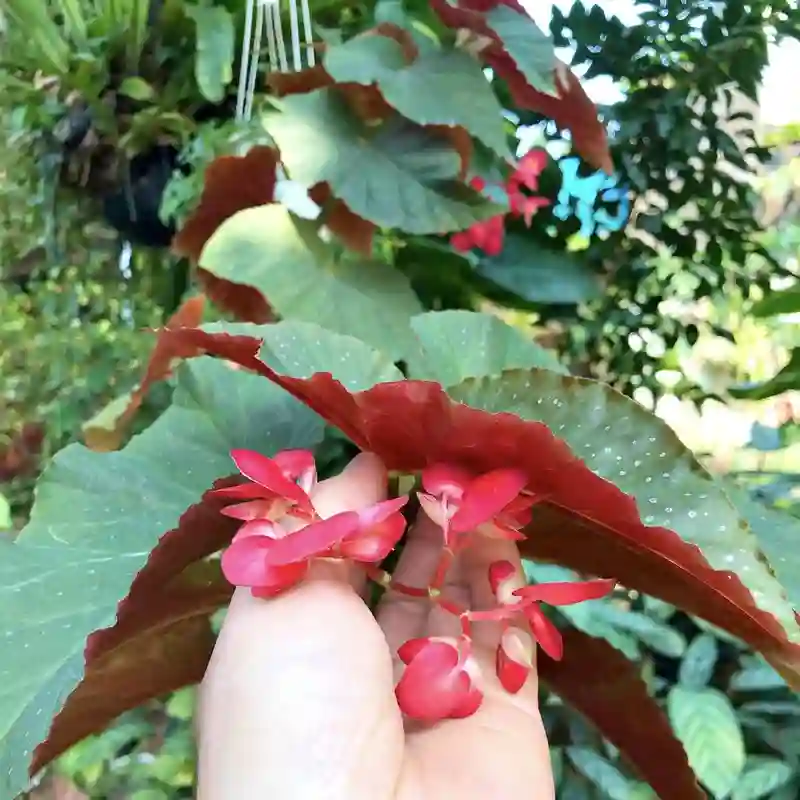
In the vast and varied genus of Begonias, Begonia listada stands out with its distinctive and elegant foliage, earning it the common name “Striped Begonia.” Unlike some of its flashier relatives, Begonia listada captivates with a refined beauty: deep velvety green leaves adorned with a striking, contrasting lime-green or bright greenish-yellow stripe running down the center vein. The undersides of these asymmetrical leaves often display a rich, warm burgundy or dark red hue, adding another layer of visual interest and creating a stunning two-tone effect.
This compact and bushy herbaceous perennial is a favorite among plant enthusiasts for its ornamental value and its relatively easy-going nature, making it suitable for both beginners and experienced growers. Whether gracing a shelf, enhancing a terrarium, or adding tropical flair to a shaded garden spot in warmer climates, Begonia listada is guaranteed to be a conversation starter. This comprehensive guide will delve into every aspect of cultivating this unique plant, from its botanical origins to advanced care techniques, ensuring your Begonia listada thrives and becomes a cherished part of your plant collection.
Botanical Insights: The Origins of the Striped Begonia
Begonia listada is a species of flowering plant in the family Begoniaceae. It is native to the wet tropical climates of Brazil and Paraguay, where it typically grows as a subshrub, reaching up to 1 meter (approx. 3 feet) in height in its natural habitat, though generally more compact in cultivation.
- Scientific Name:
Begonia listadaL.B. Sm. & Wassh. (a species, not a hybrid cultivar like ‘Looking Glass’) - Family:
Begoniaceae - Type: Shrub-like Begonia (often categorized as a “thick-stemmed” begonia, though sometimes grouped with semi-tuberous or rhizomatous due to its growth habit, it’s distinct from cane types like ‘Looking Glass’ in its stem structure and foliage texture). It is erect and non-rhizomatous.
- Origin: Brazil, Paraguay
- Mature Size: Typically up to 1-2 feet (30-60 cm) tall and wide in cultivation.
- Foliage: Densely hairy, hastate (arrowhead-shaped), asymmetrical, dark green above with a prominent lime-green to bright greenish-yellow median stripe and primary veins of the same color. Underside is dark red/purple. Velvety/furry texture.
- Flowers: Small, dainty clusters of white flowers often tinged with pink, appearing intermittently throughout the year, especially in spring and summer.
The Art of Cultivation: Mastering Begonia Listada Care
To truly appreciate the vibrant foliage and subtle charm of Begonia listada, providing optimal growing conditions is paramount. While considered relatively easy to care for, understanding its specific needs will ensure a healthy and flourishing plant.
1. Light: Illuminating the Stripe
Begonia listada thrives in bright, indirect light. The intensity of its central stripe and the vibrancy of its dark green and red hues are directly influenced by adequate light exposure. However, direct, harsh sunlight, especially the intense afternoon sun, can quickly scorch its leaves, leading to faded colors, brown spots, and overall stress.
- Ideal Placement: An east-facing window that receives gentle morning sun is often ideal. A north-facing window can also work, providing consistent indirect light, though growth might be slightly slower. If placing near a south or west-facing window, ensure it is set back several feet or shielded by a sheer curtain to diffuse intense rays.
- Signs of Too Much Light: Leaves may appear bleached, washed out, or develop crispy brown edges. The vibrant stripe might fade.
- Signs of Too Little Light: The plant may become leggy (stretched stems with sparse foliage), the stripe may become less defined, leaves might be smaller, and flowering may be reduced or absent. The plant might lean significantly towards the light source.
- Tips for Optimal Lighting:
- Rotate your plant regularly (every few weeks) to ensure all sides receive even light exposure, promoting balanced growth.
- During darker winter months, especially in regions with limited natural light, consider supplementing with a full-spectrum LED grow light positioned a few feet above the plant. This can help maintain vigor and foliage color.
2. Watering: The Moist-But-Not-Soggy Balance
Proper watering is one of the most critical aspects of Begonia listada care. These plants prefer consistently moist soil, but they are highly susceptible to root rot if the soil becomes waterlogged. The key is balance.
- Frequency: Allow the top 1-2 inches (2.5-5 cm) of the soil to dry out between waterings. This often translates to watering every 3-7 days, depending on environmental factors such as temperature, humidity, light levels, and the size and material of the pot. Always check the soil moisture before watering.
- How to Water: Water thoroughly until water drains from the bottom of the pot. It is crucial to discard any excess water collected in the saucer within 15-30 minutes to prevent the roots from sitting in stagnant water.
- Water Quality: Like many Begonias,
B. listadacan be sensitive to chemicals commonly found in tap water, such as chlorine and fluoride. Using filtered water, rainwater, or allowing tap water to sit out for 24 hours to off-gas chlorine is recommended. - Avoid Wetting Foliage: When watering, try to apply water directly to the soil at the base of the plant, avoiding splashing water onto the leaves. The velvety, hairy texture of
B. listadaleaves can trap moisture, increasing the risk of fungal diseases like powdery mildew or bacterial leaf spots. - Signs of Overwatering: Yellowing lower leaves, mushy stems, wilting (despite wet soil), and eventually, soft rot at the base. The soil will remain visibly wet for extended periods.
- Signs of Underwatering: Drooping, crispy, or curling leaves. The soil will feel completely dry throughout the pot, and the plant may appear lifeless, though it can often recover once watered.
- Tips for Optimal Watering:
- The “finger test” is your best friend: insert your finger deep into the soil to assess moisture levels.
- Consider using a moisture meter for more precise readings, especially if you’re unsure.
- Err on the side of slightly underwatering rather than overwatering.
Begonia listadacan tolerate short periods of dryness better than prolonged sogginess.
3. Humidity: A Tropical Embrace
As a native of humid Brazilian and Paraguayan forests, Begonia listada thrives in high humidity. Consistent humidity levels are essential for its overall health, preventing crispy leaf edges, promoting lush growth, and reducing susceptibility to certain pests.
- Ideal Humidity: Aim for 60-80% relative humidity.
- How to Increase Humidity:
- Pebble Tray: Place the pot on a tray filled with pebbles and water, ensuring the bottom of the pot does not sit in the water. As the water evaporates, it creates a more humid microclimate around the plant.
- Humidifier: The most effective way to provide consistent high humidity in dry indoor environments is to use a room humidifier. Place it near your plant, ensuring it’s not too close to cause waterlogging.
- Grouping Plants: Grouping
Begonia listadawith other humidity-loving plants can help create a naturally more humid environment as plants release moisture through transpiration. - Avoid Misting (Generally): While misting provides a temporary humidity boost, the hairy leaves of
Begonia listadacan trap water droplets, which can lead to fungal issues like powdery mildew, especially without excellent air circulation. It’s generally better to use the methods above for consistent humidity.
4. Soil: The Right Foundation
A well-draining, airy, and rich potting mix is crucial for Begonia listada to prevent waterlogging and ensure healthy root development.
- Ideal Mix: A high-quality general potting mix that is heavily amended with materials like perlite, coarse sand, and orchid bark or coco coir for enhanced drainage and aeration. A good custom mix could be 2 parts peat-based potting mix, 1 part perlite, and 1 part orchid bark/coco coir. African violet mixes can also work well, as they are formulated for plants that prefer consistent moisture but excellent drainage.
- pH: Prefers slightly acidic to neutral soil (pH 6.0-7.0).
- Drainage: Ensure the pot has adequate drainage holes. Do not add a layer of rocks or broken pot shards at the bottom, as this can create a perched water table and hinder effective drainage. The proper soil mix is key.
5. Temperature: Keeping it Warm and Stable
Being a tropical species, Begonia listada thrives in warm and stable temperatures. It is not tolerant of cold.
- Optimal Range: 18-29°C (65-85°F).
- Minimum Temperature: It is crucial to protect
Begonia listadafrom temperatures below 10-12°C (50-54°F). Cold drafts, sudden temperature drops, or prolonged exposure to low temperatures can cause significant stress, leaf damage, rot, and even death. - Avoid Extremes: Protect the plant from sudden temperature fluctuations, cold drafts from open windows or air conditioning vents, and direct heat sources like radiators.
6. Fertilization: Nourishing the Stripes
Begonia listada is a moderate feeder during its active growing season (spring and summer). Regular, diluted fertilization supports robust foliage growth and encourages its subtle blooms.
- Type: Use a balanced liquid fertilizer (e.g., 10-10-10 or 20-20-20 NPK ratio), diluted to half or quarter strength.
- Frequency: Fertilize every 2-4 weeks during the spring and summer months when the plant is actively growing.
- Application: Always apply fertilizer to moist soil to prevent root burn. Never fertilize a dry plant.
- Dormancy: Reduce or cease fertilization entirely during the fall and winter months when the plant’s growth naturally slows down.
- Signs of Deficiency: Overall pale or yellowing leaves, stunted growth, or a lack of new development.
- Signs of Excess: Crispy leaf edges, burnt root tips, or a buildup of white crust on the soil surface. If this occurs, flush the soil with plain water.
7. Pruning: Maintaining Form and Health
Pruning is beneficial for Begonia listada to maintain its bushy habit, encourage fuller growth, and remove any unhealthy parts.
- Pinching for Bushiness: When the plant is young or if it starts to become leggy, pinch off the growing tips of the stems. This encourages lateral branching from the nodes below the pinch, leading to a denser, more compact plant.
- Thinning Overgrown Foliage: If the plant becomes too dense, you can strategically remove up to one-third of the stems. Make cuts just above a node to encourage new growth from that point. This also improves air circulation, which is vital for preventing fungal diseases.
- Deadheading: While its flowers are not its main feature, removing spent blooms (deadheading) redirects the plant’s energy from seed production back into foliage growth and further blooming.
- Removing Damaged/Diseased Growth: Regularly inspect your plant and promptly remove any yellowing, browning, or diseased leaves and stems using clean, sharp pruning shears. This prevents the spread of disease and improves the plant’s overall appearance.
- Timing: Major pruning is best done in late spring or early summer, coinciding with the beginning of the active growing season. Light maintenance pruning can be done as needed throughout the year.
8. Potting and Repotting: Providing Adequate Space
Begonia listada generally prefers to be slightly pot-bound, but it will eventually require a larger pot to accommodate its root system and continued growth.
- When to Repot: Repot when you see roots circling the drainage holes or emerging from the top of the soil. This is typically every 1-2 years, or when the plant appears to have stopped growing.
- Pot Size: Choose a pot that is only one size larger (e.g., from a 6-inch to an 8-inch pot). Using a pot that is too large can lead to excess moisture retention, increasing the risk of root rot.
- Pot Material: Terra cotta pots are often recommended for begonias as their porous nature allows the soil to dry out more quickly, which can help prevent overwatering. Plastic pots retain moisture for longer.
- Process: Carefully remove the plant from its current pot. Gently loosen any tightly bound roots at the bottom. Add a layer of fresh, well-draining potting mix to the new pot, center the plant, fill around the root ball with more mix, and water thoroughly.
Propagation: Sharing the Striped Joy
Begonia listada is relatively easy to propagate, primarily through stem cuttings. This allows you to create new plants to expand your collection, share with friends, or simply rejuvenate an aging mother plant.
Stem Cuttings (Most Common and Effective)
- Select a Healthy Stem: Choose a healthy, mature stem that is at least 4-6 inches (10-15 cm) long, with at least 2-3 nodes (where leaves or branches emerge). Avoid stems that are currently flowering or budding, as the plant’s energy will be diverted to flower production rather than root development.
- Make the Cut: Using a clean, sharp knife or pruning shears, make a clean cut just below a node. Remove the leaves from the bottom 1-2 nodes to expose them. If the remaining leaves are very large, you can cut them in half horizontally to reduce moisture loss and prevent wilting while the cutting establishes roots.
- Rooting Medium Options:
- Water: Place the cutting in a clear glass or jar filled with fresh, filtered water. Ensure the exposed nodes are submerged but no leaves are in the water, which can lead to rot. Place the container in a warm spot with bright, indirect light. Change the water every few days to keep it fresh and oxygenated. Roots should typically appear within 2-4 weeks.
- Potting Mix: Dip the cut end in rooting hormone powder (optional, but it can accelerate root development and improve success rates). Plant the cutting directly into a small pot filled with a moist, well-draining rooting medium. A mix of perlite and peat moss, or your standard begonia potting mix, works well.
- Create Humidity: To encourage rooting, especially when rooting in soil, cover the pot and cutting with a clear plastic bag or a propagation dome to create a mini-greenhouse effect. This maintains high humidity around the cutting. Ensure there is some ventilation to prevent mold or fungal growth.
- Transplanting: Once roots are well-established (about 1-2 inches long in water, or if you see new foliage growth in soil), the cutting is ready to be transplanted into a slightly larger pot with standard
Begonia listadapotting mix. Continue to provide high humidity for the first few weeks after transplanting to help the young plant adjust.
Leaf Cuttings (Possible but Less Common)
While stem cuttings are the most reliable method for Begonia listada, leaf cuttings can also be attempted, though they are generally slower and have a lower success rate compared to some rhizomatous begonias.
- Select a Healthy Leaf: Choose a healthy, mature leaf with its petiole (leaf stem) intact.
- Prepare: Cut the petiole to about 1-2 inches (2.5-5 cm) long.
- Plant: Insert the petiole into a moist, well-draining rooting medium (e.g., perlite, vermiculite, or sandy peat mix). You can also lay the entire leaf flat on the surface of the moist soil, making small cuts on the main veins on the underside, and pin it down. New plantlets may form from these cuts.
- Humidity: Maintain very high humidity around the leaf cutting, ideally in a sealed propagation box or under a dome.
- Patience: This method requires significant patience, as it can take several weeks or even months for roots and new plantlets to form.
Pests and Diseases: Safeguarding Your Striped Treasure
Like all houseplants, Begonia listada can be susceptible to common pests and diseases. Regular inspection and prompt action are crucial for maintaining the plant’s health.
Common Pests
- Spider Mites: These tiny arachnids are difficult to see with the naked eye but leave tell-tale signs like fine webbing on the undersides of leaves and stems. They cause tiny yellow or brown stippling on leaves, leading to discoloration and eventual leaf drop. They thrive in dry, low-humidity environments.
- Treatment: Increase humidity, wipe leaves thoroughly with a damp cloth or a solution of insecticidal soap. Horticultural oil or neem oil can also be effective. Severe infestations may require systemic insecticides.
- Mealybugs: Small, white, cottony insects that cluster in leaf axils, on stems, and sometimes on the undersides of leaves. They suck plant sap, leading to stunted growth, yellowing, and distorted foliage. They excrete sticky honeydew.
- Treatment: For light infestations, dab mealybugs directly with a cotton swab dipped in rubbing alcohol. For heavier infestations, rinse the plant with a strong stream of water, apply insecticidal soap, or neem oil.
- Aphids: Small, soft-bodied insects, often green, black, or reddish, that cluster on new, tender growth and the undersides of leaves. Like mealybugs, they suck sap and excrete honeydew.
- Treatment: Rinse with a strong spray of water (being careful not to damage delicate leaves), use insecticidal soap, or neem oil.
- Thrips: Tiny, slender insects that feed by rasping plant tissue, causing silvery streaks, distorted leaves, and sometimes tiny black fecal spots.
- Treatment: Insecticidal soap, neem oil, or blue sticky traps can help monitor and control them.
- Fungus Gnats: Small, dark, mosquito-like flies that hover around the soil surface. Their larvae feed on decaying organic matter in the soil and sometimes on delicate roots, especially in overwatered conditions. While generally harmless to mature plants, a large infestation can be annoying.
- Treatment: Allow the top layer of soil to dry out completely between waterings. Use sticky traps for adults. Apply beneficial nematodes (Steinernema feltiae) or BTI (Bacillus thuringiensis israelensis) dunks to the soil to target larvae.
- Prevention is Key:
- Always inspect new plants thoroughly before introducing them to your collection.
- Quarantine new plants for a few weeks to ensure they are pest-free.
- Maintain good air circulation around your plant.
- Avoid over-fertilizing with high nitrogen, as it promotes tender new growth that pests often prefer.
- Regularly wipe down leaves to remove dust and disrupt potential pest habitats.
Common Diseases
- Powdery Mildew: A common fungal disease that appears as white, powdery spots or patches on the upper and lower surfaces of leaves and sometimes stems. It thrives in high humidity combined with cool temperatures and poor air circulation, especially when water sits on the leaves.
- Treatment: Remove affected leaves promptly. Improve air circulation by providing adequate spacing between plants. Avoid overhead watering. Apply a fungicide specifically for powdery mildew if the infestation is severe. A homemade solution of 2 tablespoons baking soda per gallon of water or diluted milk spray can also be effective.
- Botrytis (Grey Mold): A fungal disease that presents as greyish, fuzzy mold, often starting on decaying plant tissue (e.g., spent flowers, damaged leaves) but quickly spreading to healthy parts. It thrives in cool, humid, and stagnant conditions.
- Treatment: Immediately remove and discard all affected plant parts. Improve air circulation significantly. Reduce humidity if possible. Ensure proper plant hygiene by promptly removing any fallen leaves or flowers from the soil surface. Fungicides may be necessary for severe cases.
- Stem Rot / Root Rot: The most common and often fatal disease for begonias, caused by overwatering and poorly draining soil. Stems become soft, mushy, and discolored, typically at or below the soil line, leading to the collapse of the plant. Roots will be brown and mushy.
- Treatment: If caught early, remove the plant from the pot, trim away all affected (mushy, brown) roots and stems with sterilized shears. Repot into fresh, sterile, extremely well-draining soil mix. Adjust watering habits drastically to allow the soil to dry out more between waterings. Ensure excellent drainage from the pot. Often, prevention is the only cure for severe rot.
- Bacterial Leaf Spot: Appears as small, water-soaked, angular spots on leaves that may turn brown or black. These spots can merge, and a yellow halo may surround them. This disease is difficult to treat and can spread.
- Treatment: Immediately remove and destroy affected leaves. Avoid overhead watering and ensure good air circulation. Sterilize pruning tools after each cut. There are no chemical cures for most bacterial leaf spots, so prevention and sanitation are paramount.
- Viral Infections: Less common but can occur. Symptoms vary widely and can include mosaic patterns, mottling, distortion, or stunted growth. Viruses are often spread by sap-sucking insects or through contaminated tools.
- Treatment: There is no cure for viral infections. Severely infected plants should be isolated or, ideally, discarded to prevent the spread to other plants. Control of insect vectors is important.
Common Problems & Troubleshooting
Even with diligent care, your Begonia listada might occasionally show signs of distress. Here’s a quick guide to common issues and their potential solutions:
- Leaf Drop:
- Causes: Sudden changes in temperature or light, cold drafts, extreme overwatering or underwatering, severe pest infestation, prolonged low humidity.
- Solution: Identify the primary stressor and adjust environmental conditions or watering practices accordingly.
- Browning/Crispy Leaf Edges:
- Causes: Low humidity, consistent underwatering, too much direct sunlight, nutrient burn from over-fertilization.
- Solution: Increase humidity (humidifier, pebble tray), adjust watering frequency, move to a more indirect light location, or flush the soil and reduce fertilizer concentration.
- Yellowing Leaves:
- Causes: Most commonly overwatering (especially lower, older leaves), nutrient deficiency (particularly nitrogen), natural aging of older leaves, or insufficient light.
- Solution: Check soil moisture and adjust watering. If overwatering is ruled out, consider a balanced fertilizer. Ensure the plant is receiving adequate bright, indirect light.
- Stripe Fading or Becoming Less Defined:
- Causes: Insufficient light is the primary reason.
- Solution: Move the plant to a brighter location with more indirect light.
- Lack of Flowering:
- Causes: Insufficient light, lack of fertilization during the active growing season, plant is too young, or environmental stress.
- Solution: Provide brighter indirect light, fertilize regularly during spring/summer, ensure proper potting, and address any other environmental stressors.
- Stretched, Leggy Growth:
- Causes: Insufficient light, causing the plant to stretch for a light source.
- Solution: Move the plant to a brighter location with more indirect light and prune to encourage bushier growth.
Begonia Listada vs. Its Cousins: A Comparative Look
While Begonia listada is distinctive, understanding its place within the broader Begonia genus, especially compared to other popular varieties, can highlight its unique characteristics and help growers appreciate its beauty.
Begonia Listada vs. Begonia ‘Looking Glass’
These two begonias are often confused or compared due to their striking foliage, but they belong to different groups and have distinct features.
| Feature | Begonia Listada (Species) | Begonia ‘Looking Glass’ (Cane Hybrid) |
|---|---|---|
| Foliage Color | Dark velvety green with a prominent, distinct lime-green/yellow central stripe. Underside: Deep burgundy/red. | Shimmering silvery-green with olive-green veins. Underside: Cranberry-red. Highly reflective. |
| Foliage Texture | Velvety, somewhat hairy/furry (tomentose). | Slightly textured, iridescent, appears smooth and glossy/metallic. |
| Growth Habit | Compact, shrub-like, upright herbaceous perennial. Erect, non-rhizomatous. | Upright, cane-like stems (bamboo-like nodes), can be tall and bushy. |
| Primary Appeal | The sharp, contrasting central stripe and velvety texture. | The intense metallic shimmer and iridescent quality of the leaves. |
| Flower Color | Small, pink-tinted white clusters. | Soft pink clusters. |
| Origin | Species native to Brazil/Paraguay. | Cultivated hybrid (cross between B. olbia and B. goegoensis). |
| Care Nuances | Slightly more susceptible to leaf wetness due to hairy leaves; prefers consistent moisture. | Similar cane begonia care; perhaps slightly more sensitive to direct sun. |
Key Distinction: The most significant difference is the foliage. B. listada has a distinct, painted-on-looking stripe with a velvety feel, while ‘Looking Glass’ has an overall silvery sheen that feels more like a metallic coating.
Begonia Listada vs. Other Begonia Types (Cane, Rex, Tuberous, Rhizomatous)
Begonia listada is sometimes categorized loosely or confused with other types due to general begonia characteristics.
- Vs. Cane Begonias (e.g., Angel Wings, like ‘Looking Glass’ or
B. maculata): WhileB. listadagrows upright, its stems are not as distinctively segmented or bamboo-like as true cane begonias. Its leaves are also typically more velvety and hastate (arrowhead-shaped) than the often glossy, angel-wing shaped leaves of cane types. - Vs. Rex Begonias (
B. rex-cultorumgroup): Rex begonias are primarily grown for their flamboyant, often fuzzy, textured, and vibrantly colored foliage (swirls, spirals, deep reds, purples, silvers, greens). They are rhizomatous, meaning they have thick, creeping rhizomes that grow horizontally along or just beneath the soil surface, leading to a more low-growing, bushy habit.B. listadais distinctly upright and non-rhizomatous, making it different in growth form and overall texture/pattern complexity. Rex begonias often have more dramatic and varied leaf patterns than the single central stripe ofB. listada. - Vs. Tuberous Begonias: Tuberous begonias are known for their large, showy flowers and distinct dormancy period, often dying back to a tuber in winter.
B. listadais an evergreen perennial and does not form tubers or go into a significant dormancy period in the same way. - Vs. Rhizomatous Begonias (General): While
B. listadais a herbaceous perennial and can be bushy, its lack of a creeping rhizome differentiates it from the true rhizomatous begonias.
In summary, Begonia listada possesses a unique combination of characteristics: an upright, shrub-like growth habit, a distinctive central stripe on velvety leaves, and a relatively compact size, making it a truly special addition to any plant collection.
Uses and Placement: Showcasing the Striped Begonia
The compact size and stunning foliage of Begonia listada make it highly versatile for various display options.
- Indoor Houseplant: Its primary use is as an exquisite houseplant. It thrives in well-lit living rooms, offices, or sunrooms where its unique stripe and velvety texture can be admired up close.
- Terrariums and Domes: Its preference for high humidity and relatively compact growth (when pruned) makes it an excellent candidate for larger terrariums or cloches, where it can create a striking focal point.
- Containers and Hanging Baskets: While typically upright, its stems can eventually arch, making it suitable for larger containers or even hanging baskets where its red undersides can be appreciated.
- Shaded Outdoor Gardens (Warm Climates): In USDA Hardiness Zones 10 and above (where temperatures don’t drop below 10°C/50°F),
Begonia listadacan be grown outdoors as an evergreen perennial in shaded beds or containers, adding a tropical touch. It will not tolerate frost.
Conclusion: An Enduring Striped Masterpiece
The Begonia listada is a plant of understated elegance and enduring appeal. Its velvety, deep green leaves with their bold lime-green stripe and burgundy undersides offer a striking visual contrast that captivates anyone who encounters it. By providing the essential care it craves—bright, indirect light, consistent but not excessive moisture, high humidity, and a well-draining soil mix—you can ensure this striped beauty thrives and flourishes. Its ease of propagation through stem cuttings further enhances its appeal, allowing you to easily multiply its charm and share it with fellow plant lovers. Embrace the subtle sophistication of Begonia listada and let its unique foliage transform your indoor or outdoor green space into a haven of natural artistry.
My Begonia Listada Journey: A 1-Year Time-Lapse from Young Plant to Lush Bush
Hello there, fellow plant lovers! Today, I want to take you on a time-lapse journey, a personal account of growing one of my favorite begonias: the Begonia listada. This plant, with its velvety leaves and vibrant central stripe, has been a joy to cultivate, and watching it transform over the past year has been incredibly rewarding.
Chapter 1: The New Arrival (Day 1 – Month 3) – Settling In
My Begonia listada journey began almost exactly a year ago. I acquired it as a small, healthy young plant in a 4-inch nursery pot. It had about five to six leaves, each already showcasing that signature dark green with the bright lime-green stripe and the lovely burgundy underside. It was love at first sight.
Day 1: I brought it home and placed it on a shelf in my plant room, about five feet from a large east-facing window. This spot gets plenty of bright, indirect morning light, perfect for most of my begonias. I also made sure it was near my humidifier, which keeps the room at a comfortable 60-70% humidity. I gave it its first thorough watering, letting the excess drain completely, and then left it to acclimate.
Month 1: The first few weeks were uneventful, which is exactly what you want with a new plant. It showed no signs of stress, no yellowing leaves, just quietly settling into its new environment. I established a watering routine of checking the top inch of soil every 3-4 days; if it felt dry, I’d water. I was careful to water the soil directly, avoiding its fuzzy leaves.
Month 3: By the end of the third month, I noticed significant new growth. Several small, tightly furled leaves were emerging from the center of the plant, slowly unfurling to reveal their beautiful striped pattern. The existing leaves had also expanded noticeably. The plant was clearly happy and adjusting well.
Chapter 2: The Growth Spurt and First Blooms (Month 4 – Month 8) – Flourishing Life
This period was where the Listada really began to shine, showing off its true potential.
Month 4-6: The growth became more rapid. New leaves appeared almost weekly, and the stems began to elongate, giving the plant a fuller, more substantial appearance. I started a light fertilization regimen, using a diluted balanced liquid fertilizer every four weeks. I wanted to encourage lush foliage, and it certainly responded! The plant began to look less like a “young plant” and more like a compact, thriving bush.
Month 7: This was an exciting milestone! I noticed tiny, delicate pink-tinged white buds forming near the leaf axils. I wasn’t expecting flowers so soon, as I primarily got the plant for its foliage. Over the next couple of weeks, these tiny buds opened into charming clusters of flowers. They were subtle, not as showy as some begonia blooms, but they added an extra layer of beauty to the already stunning leaves. I made sure to deadhead them as they faded, redirecting the plant’s energy back into growing more foliage and potentially more blooms.
Month 8: My Begonia listada was now a robust, compact bush, about 10 inches tall and equally wide. Its velvety leaves were vibrant, and the stripes were incredibly sharp. It was definitely outgrowing its original 4-inch pot, as I could see roots starting to peek out of the drainage holes.
Chapter 3: Repotting and Continued Vigor (Month 9 – Month 12) – Reaching Full Potential
The final stretch of this time-lapse involved giving my Listada more room to grow and observing its continued progress.
Month 9: I decided it was time for a repot. I prepared a 6-inch terracotta pot with my usual well-draining begonia mix. I gently teased the plant out of its old pot, careful not to disturb the roots too much. The root ball was healthy and dense, confirming it needed more space. I settled it into its new, larger home, watered it thoroughly, and placed it back in its favored spot. It showed no signs of transplant shock, continuing to produce new leaves almost immediately.
Month 10: The plant seemed to appreciate the extra space. Its growth continued steadily, and the stems, though still fairly compact, were becoming thicker and more established. I noticed that the leaves were consistently larger and the stripe more pronounced than when it was in the smaller pot.
Month 11: During a routine check, I spotted a tiny cluster of what looked like white fluff in a leaf axil. My heart sank – mealybugs! I immediately isolated the plant. With a cotton swab dipped in rubbing alcohol, I carefully dabbed every single mealybug I could find. I then sprayed the entire plant with a diluted neem oil solution. For the next two weeks, I meticulously checked the plant daily, repeating the alcohol swab treatment as needed. Thankfully, I caught it early, and the infestation was quickly resolved. It was a good reminder to always inspect plants regularly, even healthy-looking ones.
Month 12 (Present Day): My Begonia listada is now a magnificent specimen. It stands proud at about 14 inches tall and equally wide, a dense, lush bush of velvety striped leaves. It continues to push out new growth and occasionally sports a few of its delicate pink-tinted flowers. It’s a testament to consistent care and the plant’s natural resilience. This time-lapse has shown me how much a plant can grow and evolve in just one year, making every moment of care a rewarding experience. I’m excited to see how much more it will thrive in the years to come!

If i die, water my plants!