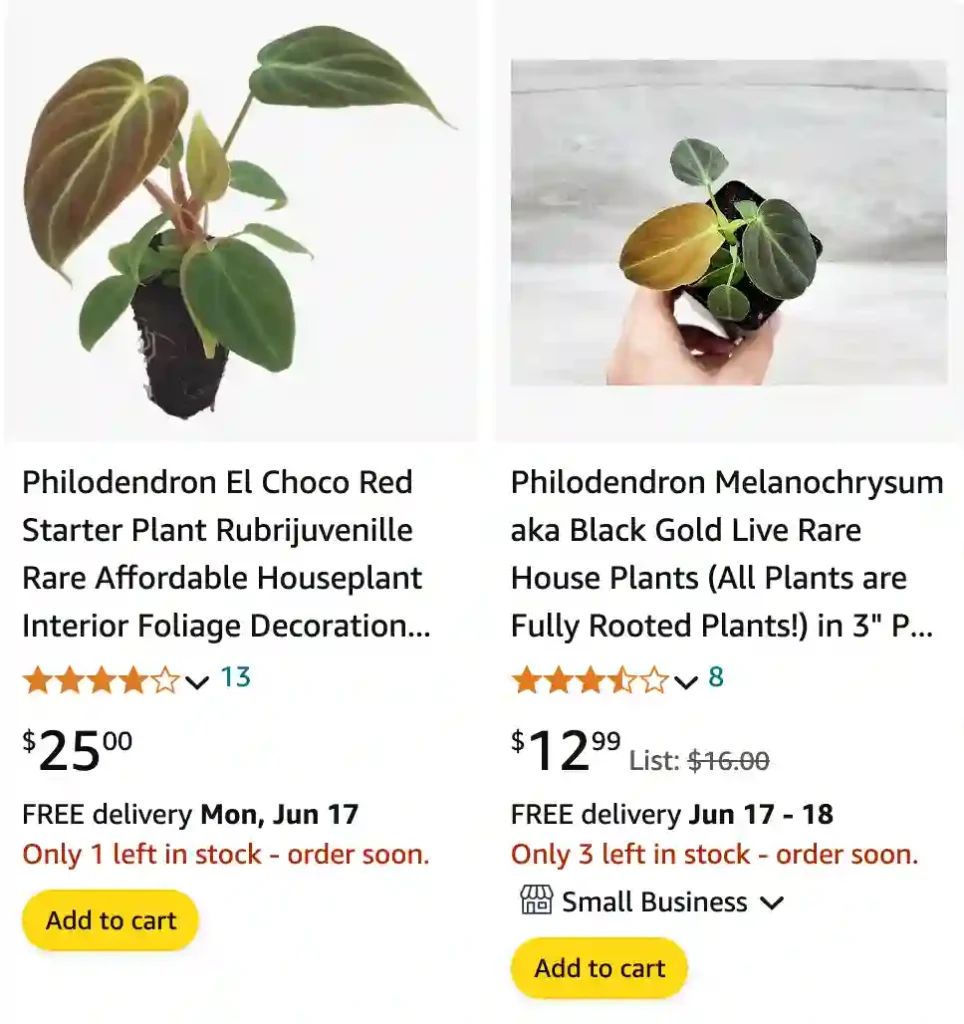
1. Introduction to Philodendron El Choco Red: The Red-Backed Jewel
1.1. What is Philodendron verrucosum ‘El Choco Red’?
The Philodendron verrucosum ‘El Choco Red’, often simply called Philodendron El Choco Red, is a unique and highly prized cultivar of Philodendron verrucosum. It is instantly recognizable by its exceptionally distinct foliage. It features large, heart-shaped to elongated leaves that have a luxurious, velvety texture and are a rich, dark green on the upper surface. What truly sets them apart is their striking deep red or burgundy underside, which contrasts beautifully with the green top and prominent lighter veins on both sides. Native to the humid Chocó region of Colombia, it is a vigorous climbing Aroid that brings an exotic and opulent aesthetic to any indoor plant collection, making it a favorite among collectors who appreciate its unique coloration and tactile appeal.
1.2. Reasons for its Appeal
Philodendron ‘El Choco Red’ captivates plant enthusiasts for several compelling reasons:
- Exceptional Velvety Texture: Its soft, velvety leaves are highly tactile and visually unique, inviting touch.
- Striking Red Underside: The bold, deep red or burgundy underside of the leaves is a rare and highly aesthetic feature that provides dramatic contrast.
- Prominent Veining: Lighter veins stand out beautifully against both the dark green top and red underside.
- Collector’s Plant: Due to its exquisite features and somewhat specialized care, it is highly sought after by Aroid collectors.
- Vigorous Climbing Habit: As a natural climber, it can be trained on supports to create impressive vertical displays.
2. Origins and Distinguishing Characteristics
2.1. Native Habitat
Philodendron verrucosum (the species from which ‘El Choco Red’ is a cultivar) is indigenous to the cloud forests of Central and South America, with this specific cultivar originating from the humid Chocó region of Colombia. In its natural environment, it grows as an epiphytic vine, climbing up large trees where it receives consistent very high humidity, moderate to warm temperatures (often cooler nights), and dappled sunlight. Its robust aerial roots cling tightly to tree bark, absorbing moisture and nutrients from the humid air and decaying organic matter. Understanding these native conditions is crucial for replicating an ideal indoor growing environment.
2.2. Leaf Morphology and Coloration
The leaves of Philodendron ‘El Choco Red’ are typically large, heart-shaped to elongated-oval, and have a rich, dark green color on the upper surface. The most defining characteristics are:
- Velvety Texture: The upper leaf surface has a distinct, soft, velvety texture.
- Deep Red Underside: The undersides of the leaves consistently display a vibrant deep red or burgundy hue, which is a key identifying feature.
- Prominent Veining: Striking lighter green or yellowish veins stand out beautifully against both the dark green upper surface and the red underside.
- Shape & Size: Leaves can be quite large, contributing to the plant’s dramatic presence.
2.3. Growth Habit and Rate
Philodendron ‘El Choco Red’ is a vigorous vining epiphyte. It produces strong aerial roots that readily attach to rough surfaces, allowing it to ascend trees or other structures in its natural environment. Indoors, providing a sturdy vertical support such as a moss pole or trellis is highly recommended. This encourages its natural climbing instinct and is crucial for the plant to produce larger, more mature leaves with enhanced velvety texture and prominent veining, and to display its striking red undersides. Without support, it tends to sprawl or trail, resulting in smaller, less developed leaves. It exhibits a moderate growth rate under optimal conditions, particularly during the warmer growing seasons.
2.4. Toxicity
Like most other Philodendron species, Philodendron ‘El Choco Red’ is considered toxic to pets (cats, dogs) and humans if ingested. It contains calcium oxalate crystals, which can cause irritation and swelling of the mouth, throat, and digestive tract, leading to discomfort, vomiting, and difficulty swallowing. It is advisable to keep this plant out of reach of pets and small children.
2.5. Comparison to Similar Philodendrons (Verrucosum, Melanochrysum, Gloriosum)
Philodendron ‘El Choco Red’ is a cultivar of P. verrucosum and shares many traits with it, but its intense red underside is a key differentiator. It is often compared to other velvety-leaved Philodendrons.
- Philodendron verrucosum ‘El Choco Red’: Characterized by velvety, dark green leaves with prominent light green veins, and a striking deep red/burgundy underside. It is a vigorous climbing Philodendron. Its stems are typically green and fuzzy.
- Philodendron verrucosum (Standard Species): Has velvety, deep green leaves with prominent light green, often iridescent veins, and its undersides can be reddish, but generally not as intensely or consistently deep red/burgundy as ‘El Choco Red’. Its petioles are usually hairy.
- Philodendron melanochrysum: Features elongated, velvety, dark green leaves with prominent lighter, often iridescent veins. It is a climbing Philodendron, but its leaves are typically narrower, lack the distinct red underside, and its petioles are smooth (not hairy).
- Philodendron gloriosum: Known for its large, heart-shaped, velvety, dark green leaves with prominent white or light green veins and often pink margins. However, P. gloriosum is a terrestrial, crawling Philodendron and does not climb vertically like ‘El Choco Red’. It also lacks the distinct red underside.
The unique combination of its velvety texture, prominent light green veins, and consistently vibrant deep red/burgundy underside clearly distinguishes Philodendron ‘El Choco Red’.
3. Comprehensive Care Guide: Nurturing Your Red-Backed Climber
Cultivating a thriving Philodendron ‘El Choco Red’ demands meticulous care to highlight its exquisite foliage and overall health, mimicking its tropical cloud forest ancestry. It is often considered best suited for intermediate to advanced Aroid growers due to its specific humidity and temperature demands.
Table 1: Quick Care Guide for Philodendron El Choco Red
| Care Factor | Requirement Description |
|---|---|
| Light | Bright, indirect light (e.g., East-facing window, filtered South/West). Ideal for 8-10 hours daily. Avoid direct harsh sun. |
| Temperature | Ideal range: 18-27°C (65-80°F). Protect from cold drafts. |
| Humidity | Moderate to high humidity (75% preferred). Essential for pristine leaves. |
| Watering | Water deeply when top 1 inch of soil is dry. Ensure soil remains moist but not soggy. Ensure good drainage. |
| Soil | Well-aerated, chunky potting mix (aroid mix: potting mix + coco coir + orchid bark + perlite). |
| Fertilization | Balanced liquid fertilizer, diluted, monthly in spring/summer. Reduce/withhold in fall/winter. |
| Pruning | Remove old/damaged leaves, prune for shape. |
| Repotting | Every 1-2 years, or when root-bound, in spring. Increase pot size slightly. |
| Support | Provide a moss pole or trellis for climbing. |
3.1. Light Requirements
Bright, indirect sunlight is paramount for Philodendron ‘El Choco Red’ to maintain its striking velvety foliage, vibrant red underside, and promote healthy growth. It needs ideally 8-10 hours of bright, indirect light daily. Place your plant near a window that receives plenty of ambient light but is shielded from harsh direct sunbeams, especially during the midday and afternoon hours. East-facing windows are often suitable, providing gentle morning sun. For south or west-facing windows, use a sheer curtain to diffuse intense light or place the plant a few feet away from the window. Direct, harsh sunlight can easily scorch its delicate velvety leaves, leading to irreversible brown spots and potentially dulling its unique colors. Conversely, insufficient light can lead to slower growth, smaller leaves, and less prominent coloration. Regularly rotating the plant ensures even light exposure and balanced growth.
3.2. Temperature and Humidity
As a plant from warm, highly humid cloud forest climates, Philodendron ‘El Choco Red’ prefers consistently warm temperatures, ideally ranging from 18-27°C (65-80°F). It’s crucial to protect it from sudden temperature drops or cold drafts (e.g., near open doors, air conditioners, or heating vents), as temperatures below 15°C (59°F) can stress the plant, halt growth, and cause leaf damage.
High humidity (around 75% preferred) is crucial for Philodendron ‘El Choco Red’‘s health and the proper development and maintenance of its unique velvety texture and vibrant red underside. Optimal growth and pristine leaf appearance are achieved with higher moisture levels. Signs of insufficient humidity might include crispy brown leaf edges or tips, or new leaves struggling to unfurl properly and becoming distorted. Consider using a room humidifier (ideal). Grouping the plant with other moisture-loving plants or placing its pot on a pebble tray filled with water (ensuring the pot itself doesn’t sit in the water) can also help create a more humid microclimate. Regular misting can provide a temporary boost.
3.3. Watering Practices
Proper watering is critical for Philodendron ‘El Choco Red’. It prefers its soil to be consistently moist but not soggy. Water deeply when the top 1 inch (2.5 cm) of soil feels dry to the touch. Ensure that the pot has excellent drainage holes and that any excess water drains out completely from the bottom. Never allow the plant to sit in standing water, as this is the primary cause of root rot. Overwatering is a common issue.
The frequency of watering will depend on environmental factors like light, temperature, and humidity, as well as the pot size and soil mix. Expect to water more often during the warmer, active growing months (spring and summer), typically weekly. During the cooler, dormant months of fall and winter, reduce watering frequency significantly, allowing the soil to dry out more thoroughly between waterings. Drooping leaves can indicate both underwatering and overwatering (due to root damage), while brown spots may be due to water logging or fungal disease.
3.4. Optimal Soil Mix and Repotting
A well-aerated, chunky potting mix with good drainage is essential for Philodendron ‘El Choco Red’. This mimics the loose, organic matter it would find in its native epiphytic environment. An ideal mix should promote good aeration while retaining sufficient moisture. A suitable blend, often referred to as an “aroid mix” or “chunky soil mix,” can include:
- High-quality potting mix (approximately 30-40%, e.g., coco coir or peat moss)
- Orchid bark (approximately 30-40%) for excellent aeration and chunkiness
- Perlite or pumice (approximately 20%) to improve drainage and prevent compaction
- Horticultural charcoal (optional, smaller amounts) for moisture retention and impurity absorption
Repotting: Repot your Philodendron ‘El Choco Red’ typically every 1-2 years, or when you notice it has become root-bound (roots growing out of drainage holes, water running straight through the pot too quickly, stunted growth). Spring is the best time to repot. Choose a new pot that is only 1-2 inches larger in diameter than the previous one, ensuring it has ample drainage.
3.5. Fertilization Strategies
During its active growing season (spring and summer), fertilize your Philodendron ‘El Choco Red’ monthly with a balanced liquid fertilizer, diluted to half the recommended strength. This provides the necessary nutrients to support vigorous growth and maintain its lush foliage and vibrant coloration. Reduce or completely stop fertilizing during the fall and winter months when the plant’s growth naturally slows. Over-fertilization can lead to salt buildup in the soil, which can burn the roots and cause leaf damage (e.g., crispy brown tips). Always water the plant thoroughly before applying fertilizer to protect the roots.
3.6. Pruning and Maintenance
Regular pruning is beneficial for Philodendron ‘El Choco Red’ to maintain its shape, encourage bushier growth, and remove any unhealthy foliage. Remove any yellowing, brown, or damaged leaves using clean, sharp scissors or pruning shears. Pruning can be done during the active growing season. Regularly wipe the leaves gently with a soft, damp cloth to remove dust, which improves the plant’s ability to photosynthesize and keeps the unique velvety texture and red underside prominent. Providing a moss pole or trellis is highly recommended, as this climbing plant benefits from vertical growth, leading to larger and more robust leaves.
4. Propagation Techniques: Expanding Your Collection
Propagating Philodendron ‘El Choco Red’ is a rewarding way to create new plants. The most common and effective method is using stem cuttings. The best time for propagation is during the spring or early summer when the plant is actively growing.
4.1. Stem Cuttings
- Select a Healthy Stem: Choose a healthy, mature stem section that has at least one node (the bump on the stem where a leaf or aerial root emerges) and preferably one or two healthy leaves. Ensure the cutting includes a section that exhibits good coloration.
- Sterilize Tools: Always use clean, sharp, and sterilized pruning shears or a knife to make your cuts. This prevents the spread of diseases.
- Make the Cut: Cut the stem just below a node. Remove any lower leaves that would be submerged in your chosen rooting medium to prevent rot.
- Rooting Hormone (Optional): Applying a rooting hormone (powder or gel) to the cut end can stimulate faster and more robust root development.
- Rooting Medium Options:
- Water Propagation: Place the cutting in a clear jar with fresh water, ensuring the node is fully submerged. Change the water every few days to keep it clean and prevent bacterial growth. Roots typically begin to form within a few weeks.
- Sphagnum Moss: Plant the cutting in moist, but not soggy, sphagnum moss. This medium provides excellent aeration and moisture retention, often leading to robust root development.
- Soil: You can also plant the cutting directly into a small pot filled with a well-draining, airy potting mix suitable for aroids. Keep the soil consistently moist but not soggy.
- Provide Optimal Environment: Place your cuttings in a warm location that receives bright, indirect light. High humidity (e.g., within a propagation box or covered with a clear plastic bag to create a mini-greenhouse effect) will significantly accelerate the rooting process.
- Potting Up: Once the roots are a few inches long (for water or moss propagation), or significant new leaf growth is visible (for soil propagation), your new plant is ready to be transitioned to a larger pot with its permanent potting mix.
5. Troubleshooting Common Issues: Pests, Diseases, and Environmental Stress
While generally robust, Philodendron ‘El Choco Red’ can encounter a few common problems if its specific care requirements are not met. Prompt identification and action are crucial for maintaining its health.
Table 2: Common Problems & Troubleshooting for Philodendron El Choco Red
| Problem | Symptoms | Solutions/Treatment |
|---|---|---|
| Yellowing Leaves | Older, lower leaves turning yellow. | Overwatering (most common), insufficient light, nutrient deficiency, natural aging. Adjust watering, fertilize, check roots for rot. |
| Brown Crispy Edges/Tips | Leaves browning and feeling crispy at edges. | Low humidity (most common), underwatering, direct sun exposure. Increase humidity, adjust watering, move to indirect light. |
| Drooping Leaves | Leaves losing turgor, looking limp. | Underwatering (most common), severe overwatering (root rot), cold shock. Check soil moisture, inspect roots, ensure warmth. |
| Stunted Growth/Less Velvety Texture | Slow growth, new leaves are smaller or lack typical velvety feel/red underside. | Insufficient light, nutrient deficiency, root-bound, lack of climbing support. Provide brighter light, fertilize, repot, offer support. |
| Leggy Growth | Long stems with sparse leaves. | Insufficient light. Move to brighter location. Prune to encourage bushier growth. |
| Pest Infestations | Visible pests (mealybugs, spider mites, thrips, scale), sticky residue, distorted growth. | Isolate plant, treat with insecticidal soap, neem oil, or appropriate pesticides. |
| Root Rot | Mushy stem base, black/brown, foul-smelling roots, yellowing/wilting. | Overwatering, poor drainage. Repot, trim rotten roots, improve drainage, reduce watering. |
| Fungal Leaf Spot | Various spots on leaves (e.g., brown spots). | Improve air circulation, reduce humidity if too high, remove affected leaves. Fungicides if severe. |
| New Leaves Sticking/Tearing | New leaves struggle to unfurl, get stuck, or tear. | Low humidity (most common). Increase humidity. |
5.1. Watering Issues
- Overwatering: This is a common cause of problems. Symptoms include yellowing leaves (particularly older, lower ones), black/brown spots on leaves, a mushy stem near the soil line, and a foul, moldy smell from the soil. This eventually leads to root rot.
- Solution: Allow the top 1 inch (2.5 cm) of soil to dry out completely between waterings. Ensure the pot has excellent drainage. If root rot is suspected, unpot the plant, trim any rotted, mushy roots, and repot in fresh, well-draining soil. Reduce watering frequency. Ensure the soil remains moist but not soggy.
- Underwatering: Symptoms include drooping or curled leaves, crispy brown edges or tips, and overall dull foliage. The plant may visibly droop when thirsty.
- Solution: Increase watering frequency. Ensure you are watering thoroughly so that water drains from the bottom of the pot, indicating the entire root ball has been moistened.
5.2. Light Issues
- Insufficient Light: Can lead to slower growth, smaller leaves, leggy stems (long gaps between leaves on the stem as it stretches for light), and less prominent velvety texture or red underside.
- Solution: Move the plant to a location that receives bright, indirect light (ideally 8-10 hours daily). Consider supplementing with a grow light if natural light levels are consistently low.
- Too Much Direct Light: Harsh direct sun, especially during midday, can cause leaf scorch. Symptoms include brown, crispy patches or a faded appearance on the leaves.
- Solution: Relocate the plant to a spot with filtered light, or use sheer curtains to diffuse intense sunlight.
5.3. Humidity and Temperature Stress
- Low Humidity: This is a very common issue for P. verrucosum cultivars. It often causes the leaf edges or tips to turn brown and crispy. New leaves might struggle to unfurl properly and could become distorted or tear.
- Solution: Increase ambient humidity using a humidifier (aiming for 75% preferred). Pebble trays or grouping plants together can also help. Regular misting can provide a temporary boost.
- Cold Stress: Exposure to temperatures below 15°C (59°F) can severely stress the plant, leading to leaf damage, wilting, and overall decline.
- Solution: Ensure the plant is in a consistently warm environment (18-27°C is ideal) and protected from cold drafts from windows or air vents.
5.4. Pests
Common houseplant pests like mealybugs, spider mites, thrips, and scale can occasionally infest Philodendron ‘El Choco Red’. Its velvety leaves can sometimes provide hiding spots for pests.
- Symptoms: Visible insects (mealybugs with white, cottony masses; spider mites with fine webbing; thrips with silver streaks and black frass; scale with hard, immobile bumps), sticky residue (honeydew), or speckled, distorted leaves.
- Solution: Regularly inspect your plant, especially the undersides of leaves and stem crevices. Isolate infested plants immediately. Treat with appropriate organic pest control methods such as insecticidal soap, neem oil, or by wiping pests off with an alcohol-dipped cotton swab. Increasing humidity can help deter spider mites.
5.5. Diseases
- Root Rot: This is a serious fungal disease, almost always a result of overwatering and poorly draining soil.
- Symptoms: Yellowing, wilting leaves (even when the soil is wet), a mushy stem near the soil line, and black/brown, foul-smelling roots.
- Solution: Immediately remove the plant from its pot. Carefully inspect the roots and prune away all affected (mushy, black) sections with sterilized shears. Repot the plant in fresh, well-draining aroid mix, and adjust your watering schedule to allow the soil to dry adequately between waterings. Brown spots may also be due to fungal disease.
- Fungal Leaf Spot: Can appear as various spots on the leaves.
- Solution: Improve air circulation around the plant, reduce overly high humidity, and remove affected leaves. Fungicides may be used in severe cases.
6. Conclusion: Enjoying Your Thriving Philodendron El Choco Red
Philodendron verrucosum ‘El Choco Red’, with its exquisite velvety foliage and dramatic red underside, is a truly captivating and rewarding plant to cultivate. By consistently providing it with bright, indirect light, appropriate watering (consistently moist but not soggy soil), high humidity, stable warm temperatures, and a well-draining, airy soil mix along with adequate climbing support, you can ensure your ‘El Choco Red’ thrives. While it demands meticulous attention to its specific needs, the reward of nurturing its unique beauty and watching it flourish will bring immense satisfaction and a distinctive touch of tropical opulence to your indoor space.

If i die, water my plants!